Key Takeaways
- Profound excels at AI visibility monitoring and citation tracking, but stops short of unifying optimization with execution at scale — leaving enterprise teams siloed.
- Enterprises outgrow Profound when they need to move beyond monitoring: automated content deployment, CMS integration, and revenue-tied measurement require a different class of platform.
- Quattr is the strongest execution-led alternative, connecting AI visibility signals directly to deployed optimizations with first-party GSC and GA4 attribution.
- BrightEdge and Conductor suit large enterprises needing deep keyword intelligence, content workflows, and consolidated analytics — without full deployment automation.
- Budget-conscious or lean teams can get solid AI visibility from Peec AI (from €89/month) or Omnia (from €79/month), without enterprise-scale complexity.
- If your team is already in the Semrush ecosystem, the AI Toolkit ($99/month add-on) is a natural fit for prompt intelligence and competitor gap analysis.
- The category is moving toward platforms that close the loop from visibility to measurable, automated execution — pure monitoring tools are no longer sufficient for scaling enterprises.
Enterprises adopting Profound quickly hit its core limits: visibility and content workflows excel at monitoring AI engines, citations, and prompts, but they stop short of unifying optimization with execution at scale. Teams end up siloed, managing insights in one tool, optimizations across fragmented CMSs and domains in another, and revenue-tied measurements manually.
The result? Friction in deploying systematic changes, proving first-party impact, or automating improvements across global markets.
You’ve evaluated Profound (as have we). Now discover five platforms taking bolder approaches to AI search optimization. In this post:
1. Look closely at the top Profound alternatives
2. Why enterprises outgrow visibility-only tools like Profound
3. Side-by-side capabilities across execution, measurement, and scale
Why Enterprises Shift from Profound
Enterprises often outgrow Profound when visibility isn’t enough to drive scalable execution:
1. Monitoring stays siloed, strong AI citation and prompt insights, but limited connection to downstream optimization.
2. Execution remains manual, teams still rely on separate tools and workflows to implement changes across CMSs and markets.
3. Scaling introduces governance gaps and a lack of a unified layer across SEO, AEO, and GEO efforts, forcing rebuilds per channel or domain.
4. Impact is hard to prove; AI visibility metrics don’t tie cleanly into GSC, GA4, or revenue outcomes.
5. Enterprise support strain adds overhead, and slow resolution cycles become costly in high-dependency environments.
These gaps are why many teams shift toward platforms that close the loop from visibility to measurable, automated execution.
The 8 Best Profound Alternatives
1. Quattr
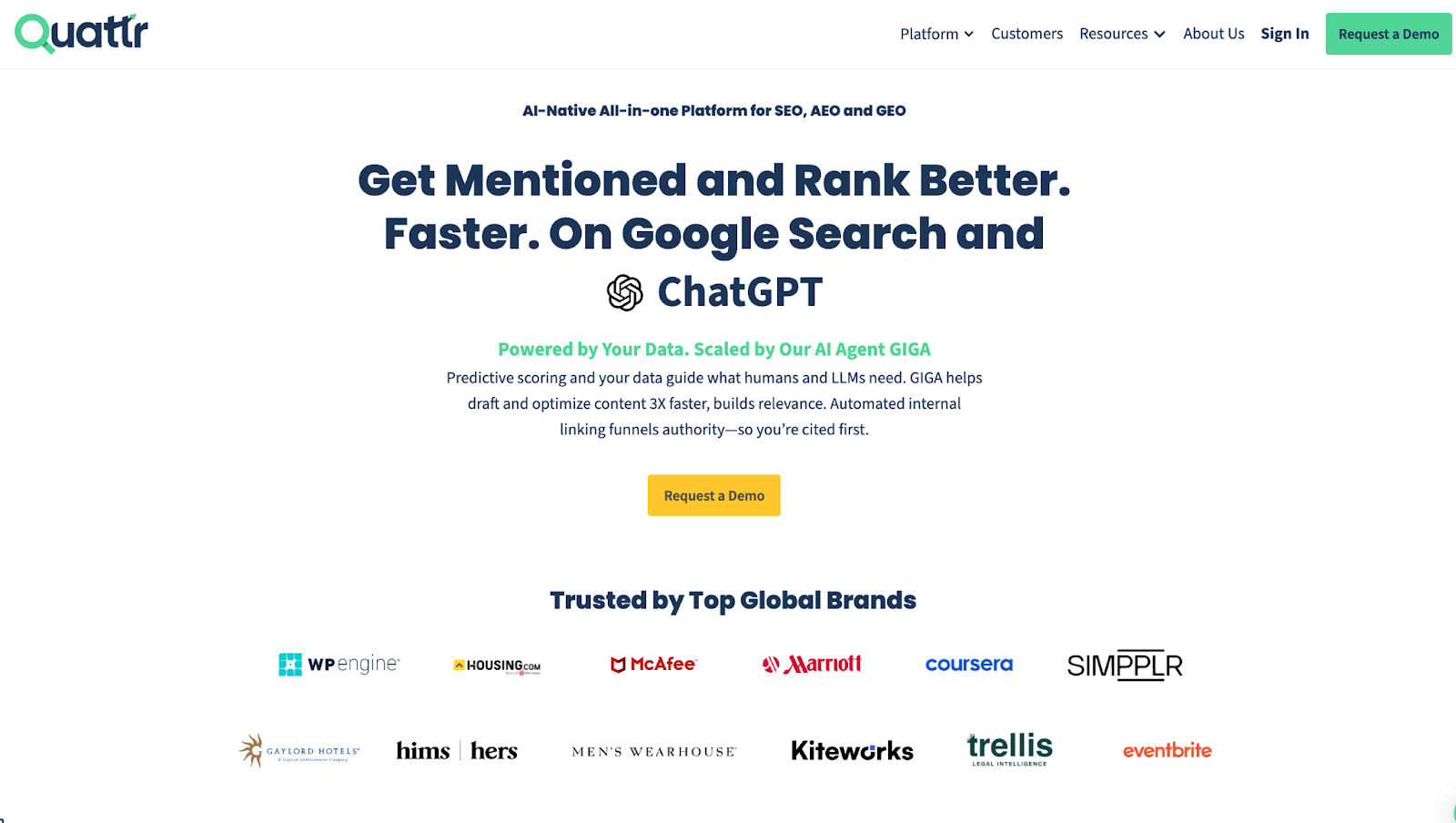
Quattr is an execution-led platform for SEO, AEO, and GEO, purpose-built to connect AI visibility insights to deployed optimizations at scale. It monitors AI search performance across Google AI overview, ChatGPT, and Perplexity, then automates content optimization, internal linking, and technical SEO fixes through APIs, CMS integrations, and edge deployment.
How is Quattr Different from Profound:
It pairs AI visibility tracking with first-party GSC and GA4 data to show which citations and mentions actually drive traffic, conversions, and revenue. It deploys fixes directly through autonomous internal linking, CMS-connected publishing (WordPress today), and SEO/AEO A/B testing to validate changes before full rollout.
Top Features
1. Monitor citations, mentions, sentiment, and share of voice across answer engines and traditional SERPs with custom Looker dashboards showing exactly where your brand appears.
2. GIGA AI analyzes your page against top-ranking competitors to automatically identify and fill semantic, structural, and intent gaps. It then drafts and optimizes content up to 3× faster using predictive traffic-lift scoring, brand-voice–aware generation, clustered GSC queries, and signals from both SERPs and AI search engines.
3. Autonomous internal linking automation at scale using semantic understanding, relevance, authority, and demand signals to build topical authority and flow link equity strategically.
4. Deploy changes instantly through APIs, CMS plugins (WordPress), or edge injection with no dev delays, validated through sandbox A/B testing before rollout.
5. Tie AI citations and answer engine visibility to first-party GSC clicks, GA4 conversions, and Adobe Analytics to connect AI search visibility directly to measurable business outcomes.
6. Dedicated SEO/GEO experts (10+ years experience) provide hands-on strategy, prompt planning, and implementation support through Slack, Teams, or regular sessions.
7. Manage optimization seamlessly across domains, languages, and CMSs with hreflang support and unified governance.
Pros and Cons
Pros:
1. Valuable insights for AEO decisions.
2. Extensive SEO/GEO tracking with seamless integration.
3. Powerful AI for content optimization.
Cons:
1. Learning curve for new users.
2. Initial setup difficulties.
3. Limited customization in dashboards/reporting.
Best For: Enterprises that need unified visibility tracking, first-party data integration, and automated execution infrastructure to scale AI search and SEO initiatives across markets and CMSs.
Pricing: Custom enterprise pricing available.
2. BrightEdge AI Catalyst
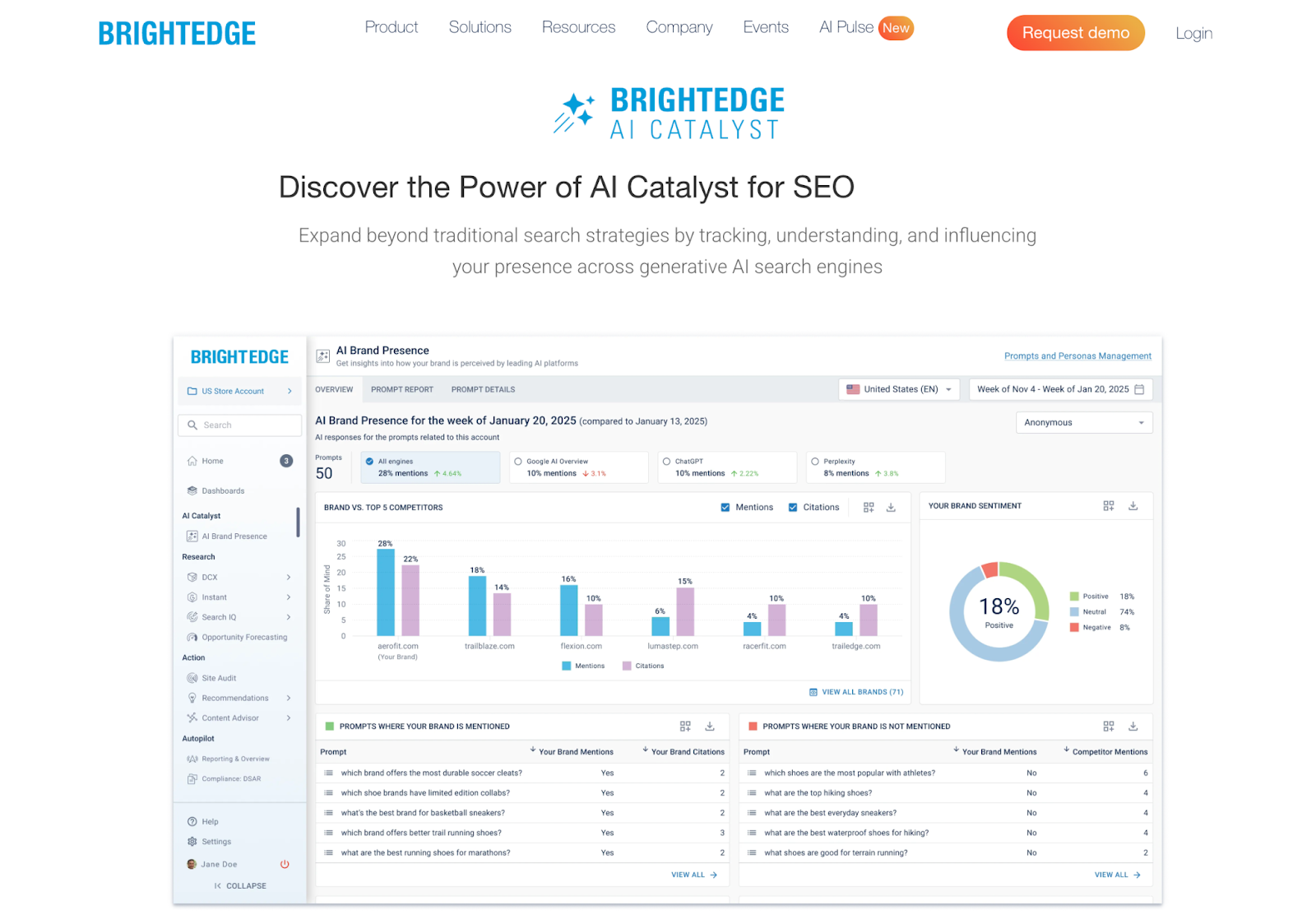
BrightEdge delivers enterprise-grade search intelligence through DataMind machine learning, powering comprehensive keyword tracking and competitive benchmarking. Its AI Catalyst extension tracks brand presence across Google AI Overviews, ChatGPT, and Perplexity, uncovering customer prompts via Copilot’s analysis of billions of historical queries and site data, eliminating guesswork in conversational search optimization. While it excels at surfacing insights for content teams to act on, implementation often requires manual alignment across tools, distinguishing it from fully automated platforms.
Top Features
1. AI Catalyst is a comprehensive solution that allows brands to track, understand, and influence their presence on AI search engines.
2. DataMind machine learning analyzes search data at scale, detects trends, forecasts ROI, and surfaces competitive intelligence.
3. AI-powered writing assistance with Copilot and workflow automation helps content teams adapt to search landscape changes and optimize content.
4. ContentIQ provides website audits for crawl health, content quality, accessibility, and performance at enterprise scale.
5. Deep integration with GSC, GA4, Adobe Analytics, APIs, and CMS platforms for unified workflow management.
Pros and Cons
Pros:
1. AI features significantly reduce research time and boost content optimization.
2. Insightful competitive analysis guides technical improvements.
3. Integral SEO tools enhance content planning and site performance.
Cons:
1. Steep learning curve with insufficient onboarding guidance.
2. Slow loading times impact daily usability.
3. Limited features in keyword research and data comparisons.
Best For: Large enterprises are seeking deep keyword intelligence, trend forecasting, and workflow alignment across marketing technologies.
Pricing: Enterprise pricing available on request; AI Catalyst included in all BrightEdge SEO Platform subscriptions.
3. Conductor
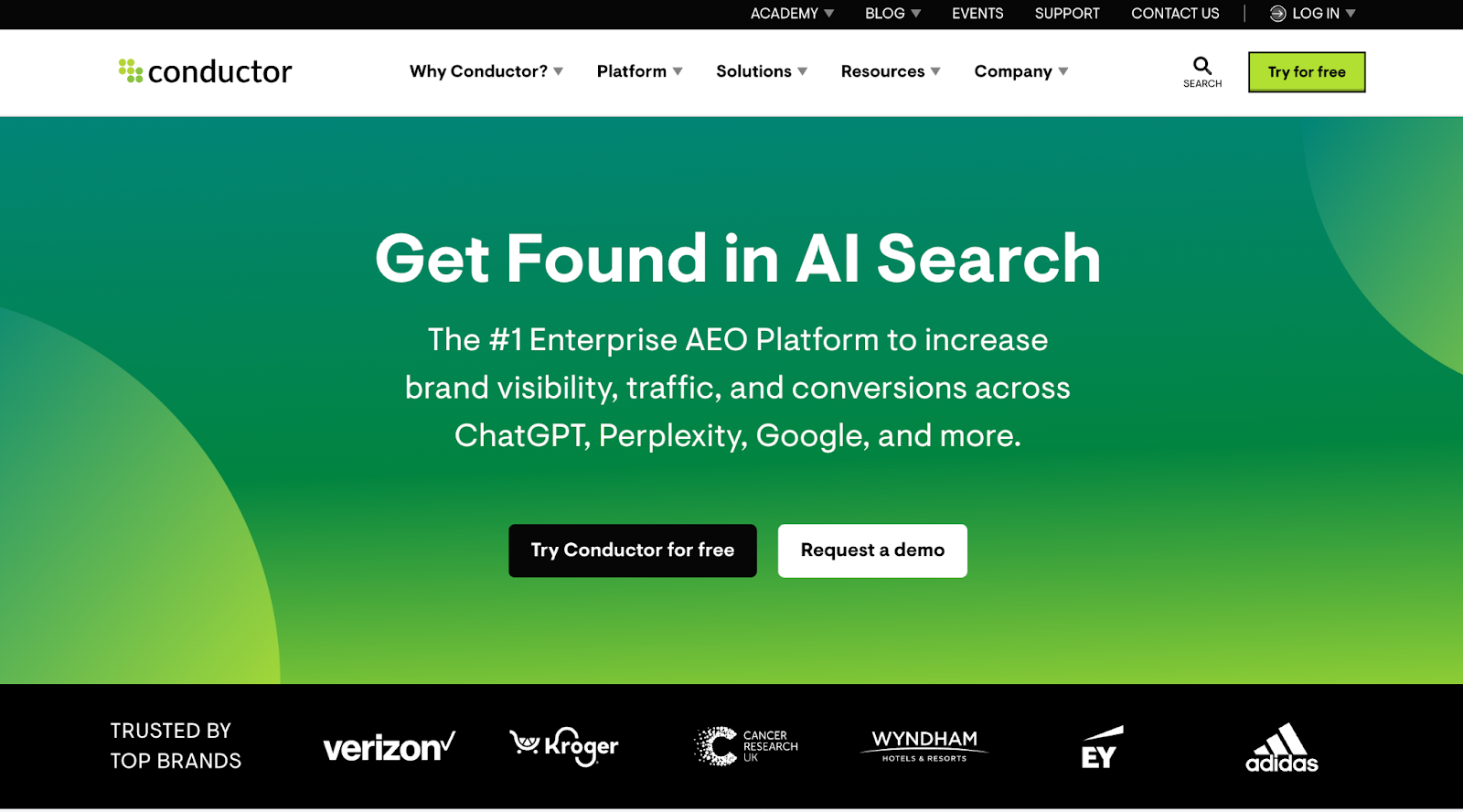
Conductor is an enterprise AI visibility platform combining AI content generation, search intelligence, and 24/7 website monitoring. The platform tracks visibility across Google, ChatGPT, and Perplexity with unified website data at scale. It excels at citation-based content creation with brand guideline enforcement but focuses on content workflows and monitoring rather than autonomous technical SEO deployment or internal linking automation.
Top Features
1. Monitors brand presence across Google AI overview, ChatGPT, and Perplexity with performance reporting and competitive benchmarking.
2. AI Writing Assistant generates on-brand content from real-time search trends, competitive analysis, and audience.
3. Unified analytics consolidate search insights, technical data, engagement metrics, and web analytics to eliminate silos.
4. 24/7 website monitoring with technical issue detection and alerting at enterprise scale.
5. Content performance tracking with citation analysis across AI engines.
Pros and Cons
Pros:
1. Ease of use supports efficient collaboration and content creation workflows.
2. User-friendly interface paired with excellent support enhances SEO execution.
3. Effective keyword tracking improves search results and reporting precision.
Cons:
1. Intimidating learning curve, lacking sufficient guidance or videos.
2. Limited advanced analytics and integration depth for complex needs.
3. Significant learning difficulty with interface and feature complexity.
Best For: Enterprise SEO and content teams managing large-scale AI visibility alongside technical monitoring, especially those valuing on-brand content generation from citation insights and consolidated analytics over fully automated execution.
Pricing: Custom enterprise pricing available.
4. Omnia
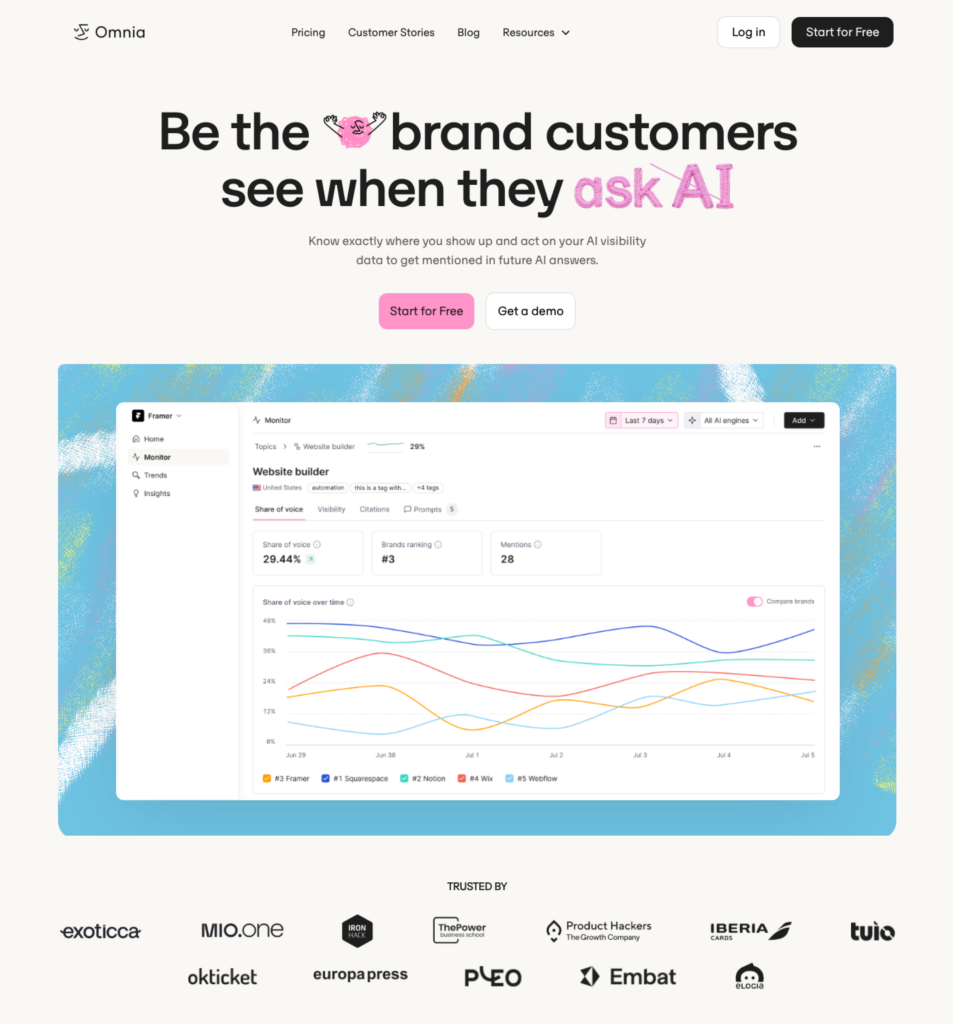
Omnia is an AI visibility platform that not only shows how AI sees your brand, but also helps you act on it so your brand becomes the answer customers see in future AI answers. Where most tools stop at reporting, Omnia gives you automated citation analysis, prompt discovery, and content recommendations that make your marketing team more effective at winning AI search.
Top Features:
1. Find the most relevant questions your customers are asking AI about your product or service, in any country.
2. Brand visibility monitoring: Track how AI engines respond to those prompts and see exactly where your brand appears, or doesn’t.
3. Competitor benchmarking: See how your brand stacks up against competitors in AI responses, prompt by prompt.
4. Automated citation analysis Understand which sources AI engines pull from about your brand, replacing hours of manual research with instant, actionable insight.
5. Gap-filling content creation: Generate content that addresses visibility gaps, ready to review, optimized to be cited by AI engines in future answers.
6. Real user behaviour (not API simulation): Omnia reflects how actual users interact with AI tools, not just how the API responds giving you a more accurate picture of your true AI presence.
7. Unlimited brand management in any country: Manage an unlimited number of brands on every plan (no upgrade required), in any country.
Pros and Cons
Pros:
1. Goes beyond reporting with automated citation analysis that shows you exactly what to do to improve AI visibility.
2. Monitors AI responses based on real user behaviour (not API outputs) for a more accurate view of brand presence
3. Unlimited brands on every plan makes it cost-effective for agencies and teams managing multiple clients
Cons:
1. No direct CMS integration (API available).
2. Not SOC 2 certified.
3. No user roles or team management.
Best For: Lean enterprises and agencies that go beyond reporting and act on improving their visibility in AI search.
Pricing: 14-day free trial available. Paid plans start at €79/month, with Enterprise plans starting at €499/month.
5. Writesonic
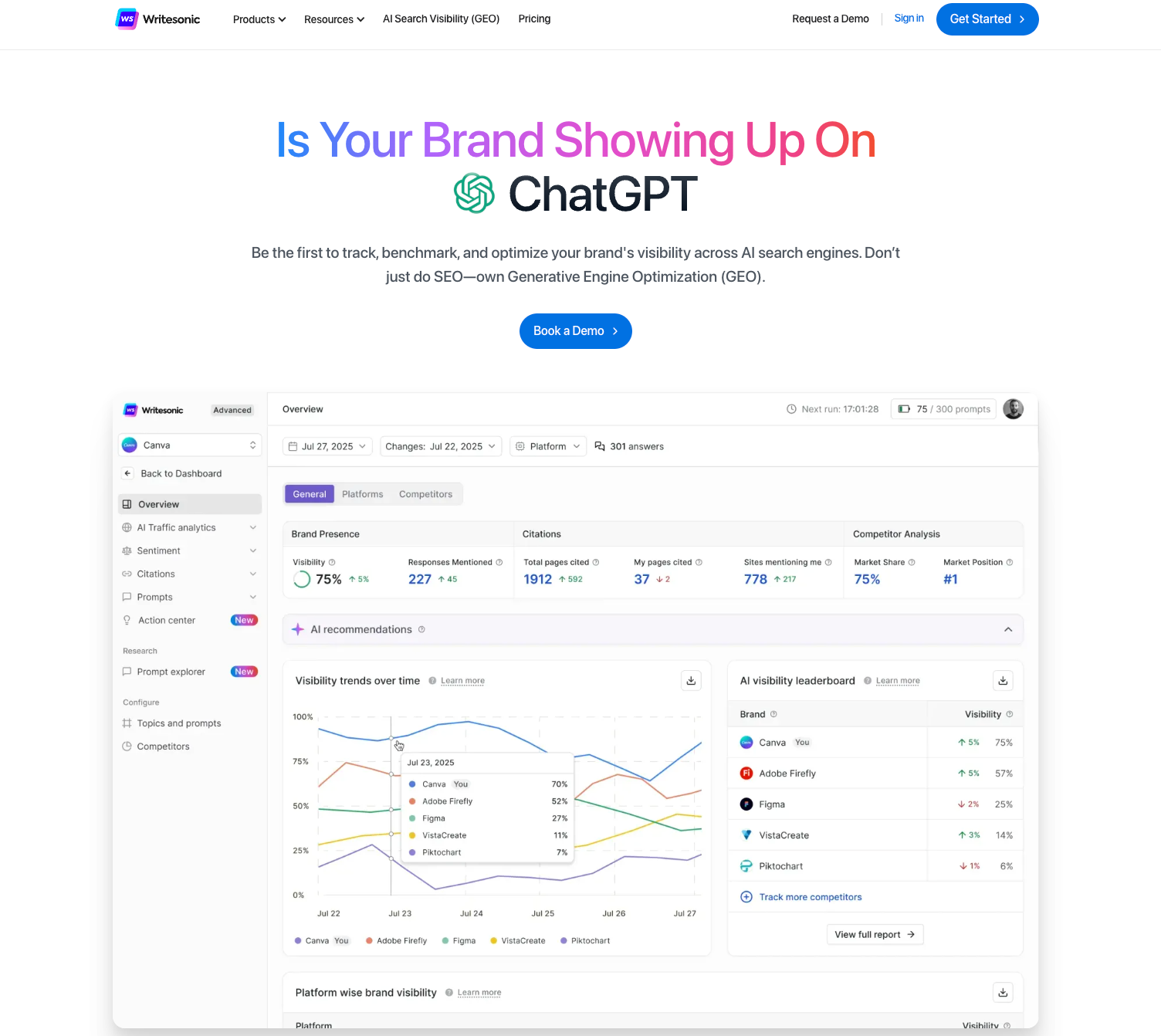
Writesonic combines AI content generation at scale with GEO via Brand Presence Explorer, tracking visibility, share of voice, and sentiment across answer engines. It benchmarks competitors on AI queries, analyzes outputs, identifies citations, and suggests optimizations, looping into brand-voice content tools. Familiar users will value AI Traffic Analytics for untracked crawler visits and ChatGPT Shopping insights; it prioritizes discover-optimize-create over autonomous CMS or governance.
Top Features
1. AI content generation with real-time Google search data integration and competitor SERP analysis for optimization during creation.
2. Chatsonic conversational AI assistant with real-time web access for research and content development.
3. Photosonic AI image generation to create visuals that complement written content.
4. Built-in fact-checking, citation capabilities, and plagiarism detection to improve content accuracy and credibility.
5. Brand voice customization and style consistency across content teams with tone controls.
6. SEO optimization recommendations during content creation with keyword integration and readability scoring.
Best For: Content-heavy enterprises and agencies are accelerating GEO through visibility benchmarking and AI-optimized creation, particularly those leveraging its 50+ templates for velocity while integrating with existing SEO stacks.
Pricing: Tiered subscription pricing starting at $16/month for individual plans, with enterprise options available.
6. Scrunch AI
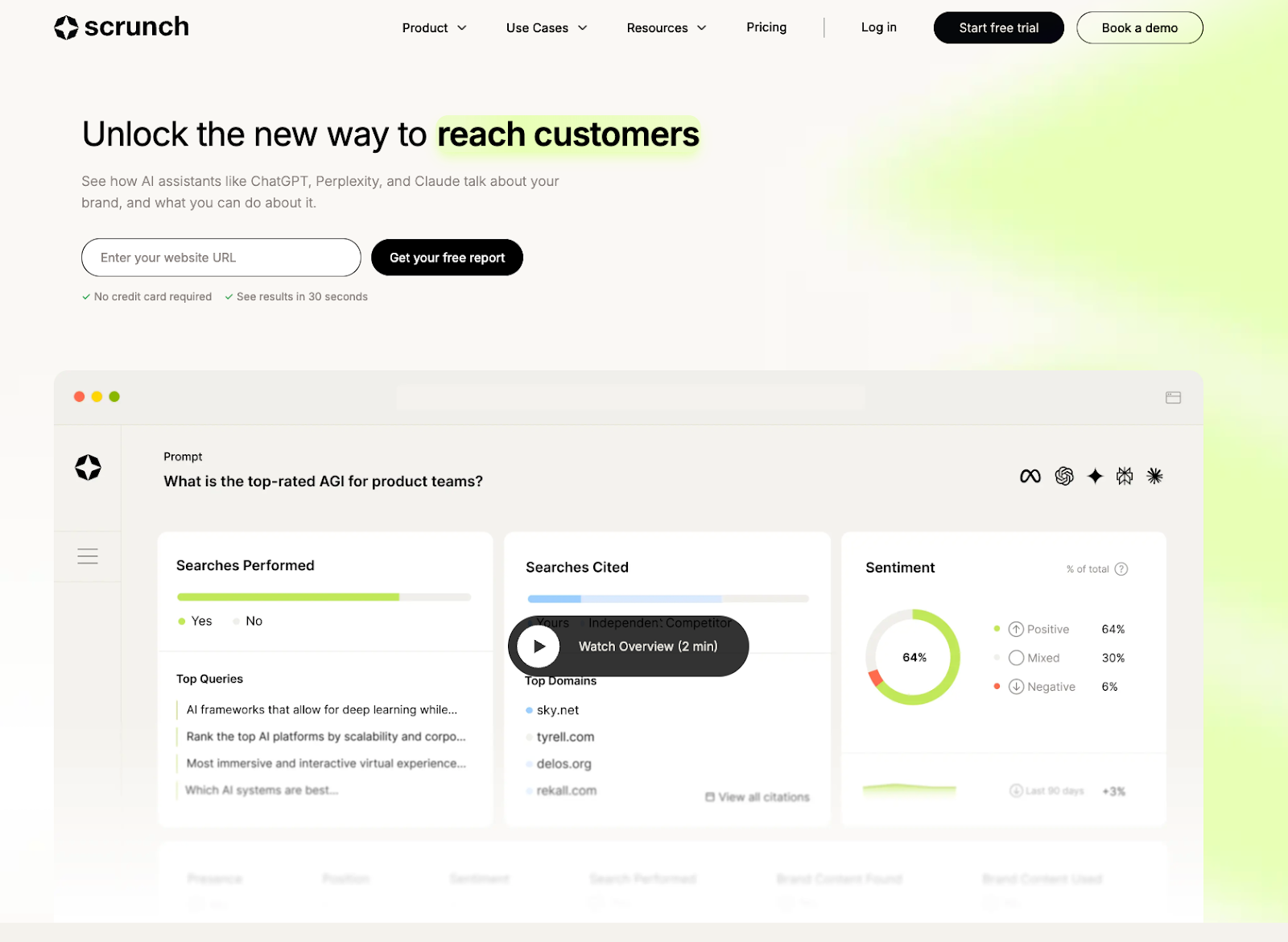
Scrunch AI focuses on the “agent experience”, monitoring brand presence across ChatGPT, Perplexity, Claude, and other LLMs while restructuring content via its Agent Experience Platform (AXP) for optimal machine parsing and citation. It tracks performance trends, prompt analytics, AI traffic patterns, competitor rankings by persona/topic/geo, and delivers optimization tips plus error detection for crawl issues. It offers enterprise-ready features like SOC 2 Type II compliance, RBAC, global multi-site deployment, and data APIs; however, it emphasizes insights and AXP reformatting over deep workflow automation or CMS-native execution.
Key Features
1. Monitors brand presence, citations, rankings, and trends across LLMs by competitor, persona, topic, and geo; real-time AI traffic and crawler feeds.
2. Actionable tips to boost ranks, citation source analysis, error detection for crawl blocks, and content recommendations tailored to AI behavior.
3. Creates parallel, machine-readable site versions with extracted meta, titles, descriptions, keywords, and headers, optimized for AI agents without disrupting human UX.
4. SOC 2 Type II compliance, role-based access, multi-brand/website/region/language support, and data APIs for internal workflows.
5. Granular breakdowns of how AI interprets sites, uncovering gaps in visibility and citation opportunities.
Pros and Cons
Pros:
1. Combines visibility tracking with rare content-layer optimization for AI interpretability.
2. Strong value for growth teams transitioning to GEO with actionable “why” insights.
3. Shifts focus from human to AI perception, critical for LLM-answer dominance.
Cons:
1. Scales better for growth than a full enterprise GEO with massive prompts/workflows.
2. Learning curve adapting from SEO to AI citation/AXP engineering.
3. Pricing tiers elevate quickly for small teams or single-site operations.
Best For: Growth-stage enterprises and marketing teams managing multi-brand, multi-region portfolios, particularly those with Lenovo-scale needs for SOC 2 Type II compliance, RBAC, global/multi-language deployment, and data APIs
Pricing: Plans start at $250/month (annual Starter); Growth around $417/month; 7-day free trial; enterprise custom.
7. Peec AI
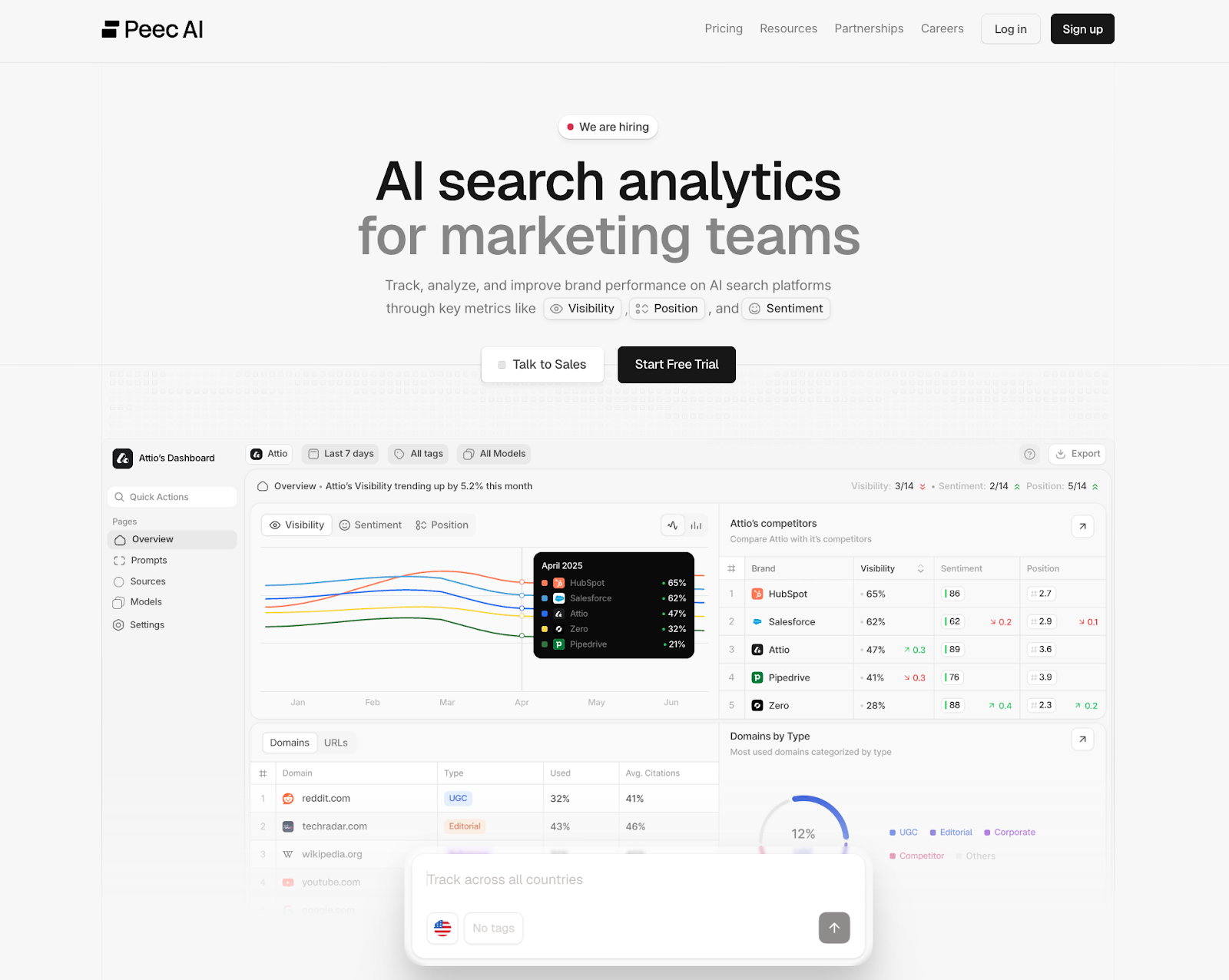
Peec AI delivers precise AI search analytics via core metrics, visibility (mention frequency), position (ranking), and sentiment, tracking brands across key LLMs while uncovering prompts, sources, and citations. Powerful for awareness and gap analysis, Peec emphasizes data export over workflows, assuming external actioning, ideal for monitoring over full GEO execution.
Key Features
1. Visibility %, position rankings, and sentiment scores across ChatGPT, Claude, Perplexity, and Gemini, trending over time with niche categorizations.
2. Add/organize custom prompts with tags, AI-suggested high-volume queries, and country-specific tracking for relevance.
3. Benchmark brands head-to-head; map citations to domains/URLs (e.g., G2, LinkedIn, NYT) with GEO strategy recommendations.
4. Actionable tips like reviewing profiles, subreddit engagement, or PR placements to boost rankings and visibility.
5. CSV exports, Looker Studio community connector, and API for automated dashboards and team/client sharing.
Pros and Cons
Pros:
1. Laser-focused metrics for AI answer visibility, position, and sentiment—data built for the LLM era.
2. Affordable entry for prompt-heavy tracking; unlimited seats enable agency/multi-client efficiency.
3. Prompt-level and source insights reveal the “why” behind rankings, accelerating GEO hypothesis testing.
Cons:
1. Monitoring-only, no native content creation, optimization workflows, or technical deployment.
2. Optimization guidance relies on general recommendations; it lacks deep, automated action plans.
3. Pricing scales with prompt volume/regions, potentially costly for exhaustive tracking.
Pricing: Starts at €89/mo (~$95) for Starter; scales with prompts/usage; free trial available.
8. Semrush AI Toolkit
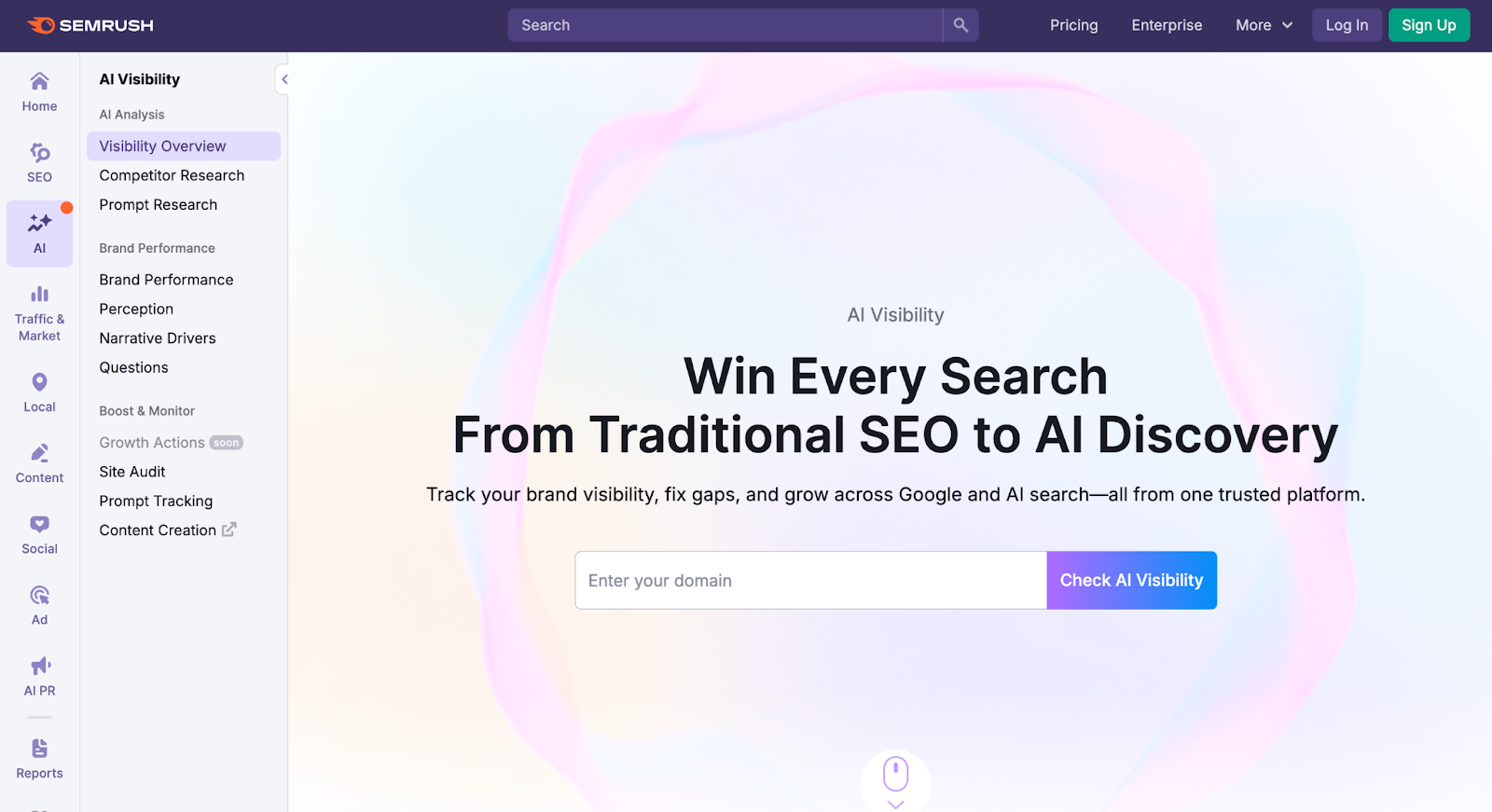
Semrush AI Toolkit extends its core platform with AI-specific capabilities like prompt research, competitor analysis revealing where rivals appear but you don’t, and unified tracking of brand mentions across answer engines. While powerful for planning and measurement within Semrush workflows, it emphasizes intelligence and content optimization over autonomous CMS deployments or multi-domain governance found in execution-first platforms.
Key Features
1. Generate related high-value prompts; identify conversations where competitors rank, but you don’t, backed by AI volume scores and topic difficulty.
2. Monitors brand mentions, sentiment, and performance across ChatGPT, Google AI, Gemini, Perplexity; includes AI traffic analytics and market share insights.
3. AI-generated landscape analysis, sentiment tracking, query themes, and strategic recommendations for content/marketing adjustments.
4. 300 daily reports, Looker Studio exports, Claude MCP for conversational ad analysis; scales to 50 competitors.
Pros and Cons
Pros:
1. Seamless integration with the Semrush SEO suite accelerates prompt-to-content workflows.
2. Comprehensive AI visibility across major engines with actionable gap insights.
3. Strong sentiment and competitor analysis reveal nuanced positioning opportunities.
Cons:
1. An additional $99/mo cost on top of core Semrush subscriptions limits accessibility.
2. Relies on the Semrush ecosystem; less ideal for non-users seeking a standalone GEO.
3. Optimization stays recommendation-based, lacking autonomous deployment capabilities.
Pricing: $99/month add-on to Semrush subscriptions (Pro $139.95/mo base); includes 300 reports/day, 25 custom prompts, 1 domain Brand Performance.
Comparison Table
| Platform | Positioning | Pricing | Core Advantage vs Profound |
|---|---|---|---|
| Quattr | Execution-led SEO + GEO platform | Custom enterprise pricing | Connects AI visibility directly to automated optimization + revenue outcomes |
| BrightEdge AI Catalyst | Enterprise search intelligence + forecasting | Enterprise pricing on request | Deep keyword + competitive modeling at massive scale |
| Conductor | Unified AI visibility + content workflows | Custom enterprise pricing | Strong citation-driven content creation with consolidated analytics |
| Omnia | Monitoring and analysis for acting on your AI search data. | Starts at €79/month, enterprise from €499. | Goes beyond analytics and helps you act to become more visible in AI. |
| Writesonic | AI content velocity + GEO benchmarking | Plans start at $16/month; enterprise available | Fast AI creation paired with broad answer-engine visibility tracking |
| Scrunch AI | Agent Experience + AI-readable content layer | Starts at $250/month; enterprise custom | Unique focus on structuring content for AI agents + citations |
| Peec AI | Pure-play AI search analytics | Starts at €89/month (~$95) | Lightweight, affordable AI visibility + prompt/source insights |
| Semrush AI Toolkit | GEO add-on inside the Semrush ecosystem | $99/month add-on (plus base Semrush plan) | Strong AI prompt + competitor intelligence for existing Semrush users |
Choosing the Right Profound Alternative
Profound is a strong starting point for understanding how your brand shows up across AI engines. But as enterprise teams scale, visibility alone rarely solves the bigger challenge: turning insights into consistent execution across markets, CMSs, and stakeholders.
The alternatives in this list reflect where the category is heading, toward platforms that go beyond monitoring and help teams operationalize AI search optimization with tighter measurement, governance, and speed.
For enterprises looking to move from tracking AI visibility to actually deploying improvements that drive traffic, conversions, and revenue, Quattr stands out as an execution-first approach built for scale.
Want to see what that looks like on your own site? Book a demo, and we’ll show exactly how Quattr connects AI visibility signals to measurable, shipped optimizations.
FAQs on Profound Alternative
Enterprises often outgrow Profound because visibility alone isn’t enough. Teams need a platform that connects AI search insights to real execution across CMSs, multiple domains, and global markets, with measurable impact tied to first-party data like Google Search Console, GA4, and revenue outcomes.
AI visibility platforms show where your brand appears in AI answers. Execution platforms go further by helping you:
Deploy content updates automatically, fix technical SEO issues, scale internal linking, govern changes across markets, and prove outcomes tied to revenue. Enterprises increasingly need both visibility and execution in one layer.
A GEO platform helps enterprises optimize for AI answer engines like ChatGPT and Google AI Overviews, not just traditional SERPs. It focuses on citations, prompt visibility, AI share of voice, and execution workflows built for how LLMs surface content.

Quattr is an AI-native Search Visibility Platform founded in Palo Alto, California, built for mid-market and enterprise brands competing in the age of generative search. Recently recognized across G2's Spring 2026 reports with #1 rankings in AEO Results, Usability, and Relationship, Quattr helps brands win visibility across traditional search and AI-generated answer surfaces.
Quattr's AI agent, GIGA, evaluates content the way AI systems do, identifying gaps across structure, authority, internal linking, and discoverability to surface the highest-impact fixes. With capabilities like autonomous internal linking, E-E-A-T intelligence, and the new GIGA Landing Page Generator for keyword-matched, AI-search-ready pages, Quattr helps teams move from diagnosis to deployed changes without manual bottlenecks.