

Table of Contents
4.
5.
6.
7.
8.
9.
10.


Case Studies
What Makes Quattr an Execution-Led AI Visibility Platform for AEO & SEO
Execution vs Monitoring: What Sets Quattr Apart in AI Search Visibility
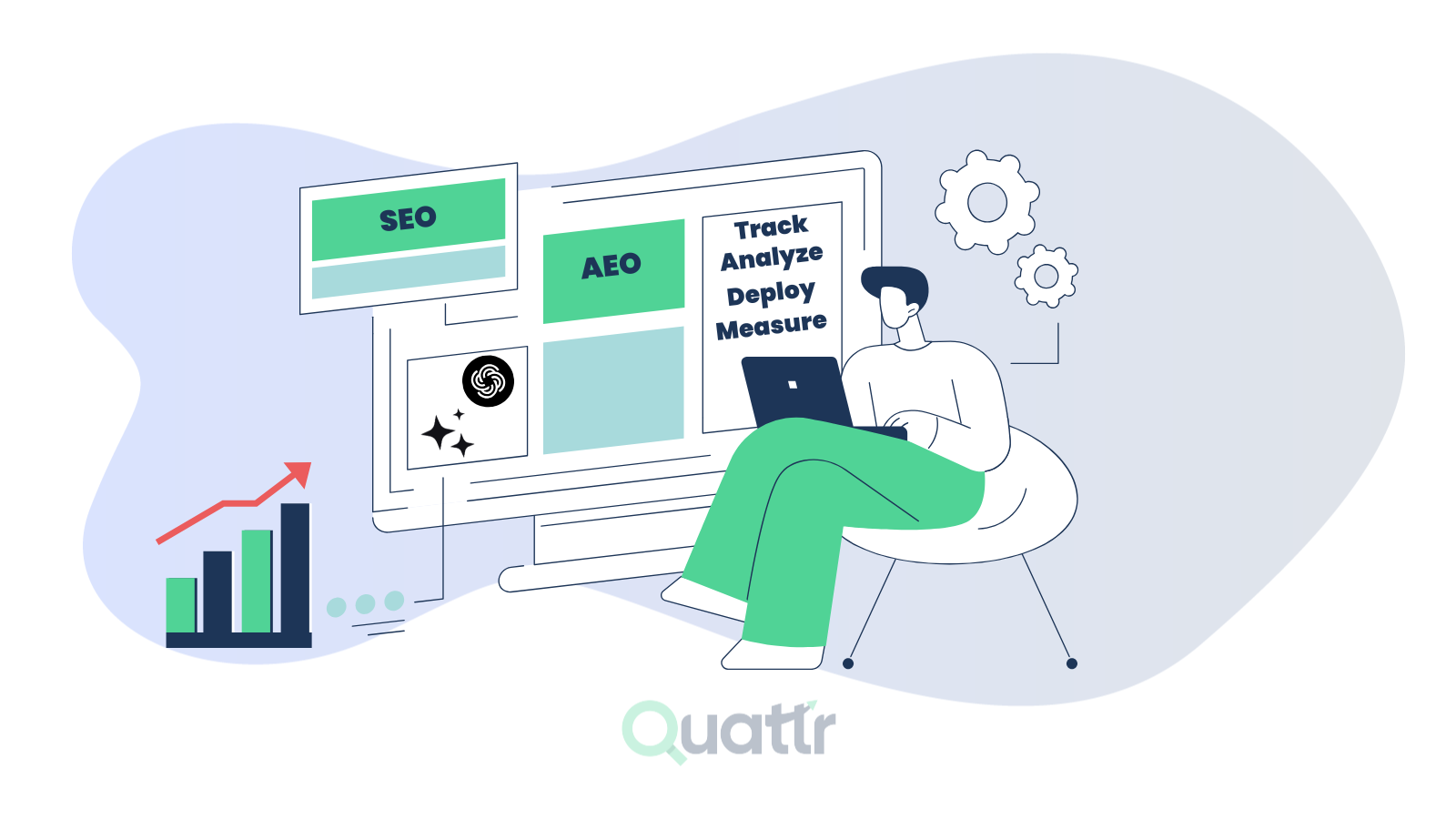
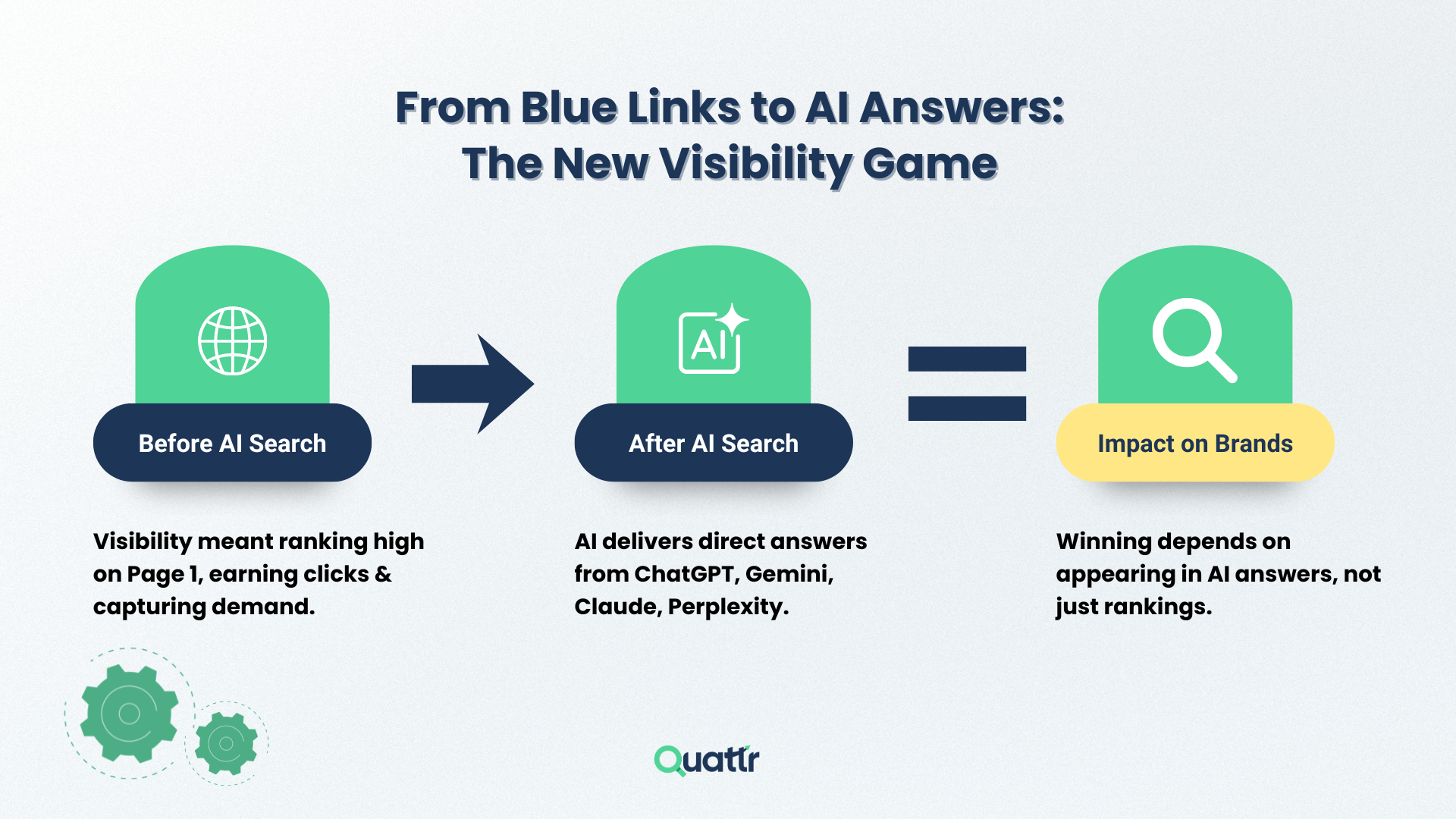
Generative AI has permanently altered how users discover, evaluate, and act on information. With Google AI Overviews and answers delivered by ChatGPT, Gemini, Claude, and Perplexity, etc, visibility goes far beyond ten blue links.
Ranking alone does not tell you the whole story. You also need to know exactly where your brand shows up in AI-driven summaries, and, more importantly, be able to act on those insights to shape the customer journey.
The problem is that most AI search visibility platforms today are good at detection. They can show you mentions and help monitor your brand’s footprint across AI. But they don’t help you act on it.
For SEO managers and digital marketing experts running large-scale content operations, where teams are already stretched across technical SEO, content creation, and conversion alignment, the last thing they need is another silo of “insight-only” data that doesn’t connect to results.
The need is for a search visibility platform built for execution. A platform that not only monitors AI visibility but also lets you deploy changes and measure the impact.
This is where Quattr steps in. Quattr was purpose-built as an execution-led AI search visibility platform, equipped not only to track AI search ecosystems in granular detail, but to let you govern, deploy, and measure changes directly, tied to real outcomes like conversions and growth.
In this blog we will cover why execution, not just detection, is the advantage over monitoring-only platforms and how Quattr turns AI visibility into measurable business impact.
What You Need to Know
AI visibility is driven by execution, not just strategy or reporting.
Brands that consistently publish, optimize, update, and distribute content tend to appear more often in AI answers.
AI systems reward clear, structured, and frequently refreshed information across the web.
Execution-led SEO helps improve citations, entity recognition, and visibility across AI platforms.
Visibility across forums, reviews, PR, and third-party mentions also influences AI recommendations.
Tracking alone is not enough; continuous optimization is what compounds AI visibility over time.
Table of Contents
4.
5.
6.
7.
8.
9.
10.
The Gap in Current AI Visibility Platforms
Most current platforms share three shortcomings:
First, they stop at insights with no path to execution. These tools show you citations, mentions, and sentiment signals but leave remediation and optimization to manual workflows in your CMS or dev teams. Rather than helping you act, they create operational bottlenecks.
Second, visibility metrics are disconnected from ROI. Most tools track “visibility” in isolation, without linking appearances in AI summaries to clicks, conversions, or share of voice.
Third, they’re not built for enterprise complexity. Multi-domain, regional assets, and documentation hubs end up managed in silos, forcing teams to juggle multiple dashboards without seeing the complete picture. Even when optimization insights exist, there’s no way to scale changes across enterprise websites, leaving endless to-do lists without moving the needle.
Put simply, you end up with another layer of data to watch, but not a system built to act. By the time insights crawl their way through development sprints, AI rankings have shifted, and competitors have seized your opportunity.
Core Capabilities of an Execution-Led Platform like Quattr
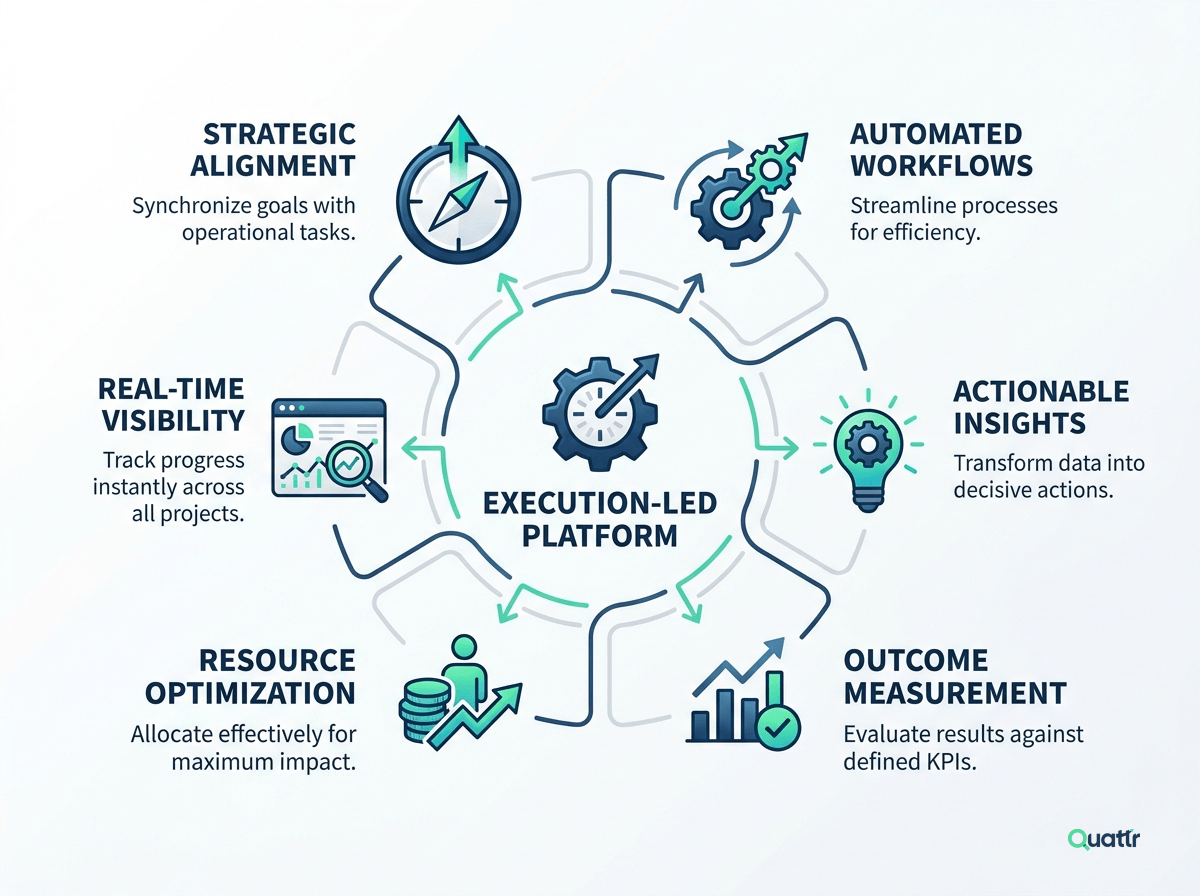
To deliver true enterprise value, an AI visibility platform must integrate strategic tracking, deployment, consolidation, and governance in one ecosystem. Here’s how Quattr helps you act.
1. Comprehensive Visibility Tracking Across AEO and SEO
Detection must go deeper than citations. Quattr captures:
i. Citations across AI engines: Monitoring appearances in Google AI Overviews, Google AI Mode, ChatGPT, Gemini, Claude, and Perplexity.
ii. Brand Mentions with sentiment analysis: Understanding not just if the brand is cited, but how it’s portrayed, positive, negative, or neutral.
iii. Share-of-voice analytics: Quattr’s Market Share Metric enables you to benchmark your AI footprint against competitors, surfacing gaps that are responsible for their advantage.
This isn’t “brand monitoring.” It’s enterprise-grade visibility intelligence, built for competitive strategy and tied to business outcomes.
2. Content Governance
Quattr prioritizes your content gaps, helping you identify which existing pages require refreshes to become AI search-ready. Quattr supports with governance features that help teams:
i. Content freshness and predictive scoring: Identify pages that need updates and forecast which changes will have the biggest impact. Quattr leverages AI and historical data to prioritize SEO, AEO and GEO efforts by scoring content based on its potential impact and relevance.
ii. Taxonomy and internal linking management: Organize content into structured hierarchies and contextual tags so content optimization and internal linking follow business priorities, not just keywords.
3. Unified Data Consolidation
Analytics lives in one place, search console in another, visibility data in a third. The result is fragmented reporting and missed attribution. Quattr consolidates:
i. AI visibility tracking and SEO SERP tracking.
ii. Google Search Console queries, impressions, and CTR.
iii. GA4 clickstreams, engagement, and conversions.
iv. Bot crawling analytics with log files.
v. Web page performance tracking, technical SEO monitoring and benchmarking.
By merging these, teams see not just where they were cited but how that appearance translated into on-site performance. Visibility analysis becomes a revenue analysis, not just a dashboard exercise.
4. First-Party Data Comparison
Quattr integrates natively into first-party analytics:
i. Mapping AI citation directly to GSC click or impression changes.
ii. Highlights which mentions actually drive conversions in GA4.
Instead of evaluating “exposure,” you’re evaluating impact, a distinction that defines ROI-focused marketing.
5. Multi-Domain & Multi-Market Support
Enterprises often operate more than one .com property. Teams simultaneously manage eCommerce storefronts, global CCTLD setups, product documentation hubs, and multiple CMS backends. AI search visibility platforms that treat domains in isolation create fractured strategies.
Quattr aligns visibility execution consistently across:
i. Tracks and optimizes visibility across multiple domains and regional sites.
ii. Works across parallel CMS environments without a fragmenting strategy.
iii. Supports hreflang and localized content so authority carries across global markets.
6. Deployment Capabilities: Turning Insights Into Action
Most visibility platforms stop at showing you what’s wrong. Quattr closes the loop by deploying fixes of internal linking directly at scale for enterprises.
i. Autonomous internal linking: Through APIs, CMS plugins, and edge integrations, Quattr injects optimized internal links across properties at scale, without developer bottlenecks or manual edits.
ii. CMS-connected publishing (WordPress today): Quattr reduces handoffs by connecting directly to WordPress. Teams can push optimized content or page drafts straight into the CMS, offloading the repetitive task of drafting updates manually.
iii. SEO & AEO A/B testing: Before full rollout, Quattr enables controlled experiments, testing internal linking strategies, content optimizations, or AI visibility improvements against competitor benchmarks. This ensures every deployment is validated by measurable lifts in visibility, traffic, or conversions.
This execution-first approach transforms Quattr from a recommendation engine into a change engine.
7. Your Quattr Strategist
Beyond technology, Quattr provides hands-on support through a dedicated SEO/GEO expert with more than 10 years of experience in enterprise search and digital growth. This partner helps select prompts, craft generative optimization strategies, and collaborates with in-house teams, delivering ongoing guidance across meetings, Slack, or Teams to accelerate your AI search initiatives.
From Tracking to Winning with Quattr
As AI search becomes a major discovery channel, brands need more than traditional SEO reporting. They need visibility into how AI engines actually perceive, retrieve, cite, and recommend their content across platforms like ChatGPT, Google AI Mode, Gemini, Claude, and Perplexity. Quattr’s AI Visibility Dashboard is built specifically for this new search environment.
Instead of tracking AI visibility model by model in disconnected workflows, Quattr gives teams a unified executive view across multiple AI engines simultaneously. Businesses can monitor citations, Share of Voice, mentions, sentiment, competitor visibility, and retrieval performance from a single interface with fast-loading, real-time analysis.
What makes Quattr especially powerful is that it goes beyond reporting. The platform directly connects AI visibility insights to execution. Teams can identify which pages are failing to earn citations, diagnose retrieval gaps, improve entity completeness, optimize internal linking, strengthen content structure, and feed those insights directly into Quattr’s optimization and GIGA AI workflows.
Instead of treating AI visibility as a vanity metric, Quattr turns citation measurement into an operational framework for improving discoverability across AI-powered search experiences.
As search shifts from links to AI-generated answers, Quattr helps enterprises measure, understand, and improve the exact signals that influence AI retrieval and recommendation at scale.
Explore How Quattr Helps You Win AI Search Visibility
Request a DemoFAQs on Execution-Led AI Search Visibility Platform
How is Quattr different from other AI Search Visibility Platforms?
Most tools stop at showing mentions and citations. Quattr is execution-first, meaning it helps you act on insights with internal linking, governance, and CMS-connected deployment.
Why does “execution-led” matter for SEO teams?
Insights without execution sit in dashboards. Execution-first platforms like Quattr turn insights into live changes that impact traffic, conversions, and revenue.
How does Quattr measure the ROI of AI visibility?
Quattr ties AI citations directly to first-party data from Search Console and GA4, showing whether visibility resulted in clicks, conversions, and revenue.
About the Author

About Quattr
Quattr is an AI-native Search Visibility Platform founded in Palo Alto, California, built for mid-market and enterprise brands competing in the age of generative search. Recently recognized across G2’s Spring 2026 reports with #1 rankings in AEO Results, Usability, and Relationship, Quattr helps brands win visibility across traditional search and AI-generated answer surfaces.
Quattr’s AI agent, GIGA, evaluates content the way AI systems do, identifying gaps across structure, authority, internal linking, and discoverability to surface the highest-impact fixes. With capabilities like autonomous internal linking, E-E-A-T intelligence, and the new GIGA Landing Page Generator for keyword-matched, AI-search-ready pages, Quattr helps teams move from diagnosis to deployed changes without manual bottlenecks.

Read More


Ready to see how Quattr
can help your brand?
Try our growth engine for free with a test drive.
Our AI SEO platform will analyze your website and provide you with insights on the top opportunities for your site across content, experience, and discoverability metrics that are actionable and personalized to your brand.