

Key Takeaways
- E-E-A-T is not a score or a setting; it’s how Google decides whether a source is worth citing, and AI search has made that judgment binary.
- In AI Overviews, there is no fourth slot. A handful of sources get cited; everything else doesn’t. Credibility gaps that once cost you ranking positions now cost you inclusion entirely.
- Most gaps come down to the same things: author pages that prove nothing, content researched rather than lived, and trust pages that satisfy legal requirements but answer no real questions.
- AI search looks at domains, not just pages. A well-optimized page on a site with shallow topical coverage is a weaker citation candidate than a page on a site that has built genuine depth across a subject.
- These signals degrade. Content goes stale, authors leave, and data gets outdated. Sites that treat E-E-A-T as a one-time fix lose ground to those that maintain it.
E-E-A-T: Experience, Expertise, Authoritativeness, and Trust- is Google’s qualitative framework for evaluating whether content is genuinely helpful and credible. It’s not a score. It’s not a ranking factor in the traditional sense. It is the lens through which Google’s systems, its quality raters, and increasingly its AI infrastructure decide which sources are worth surfacing.
Today, this distinction matters more than ever. AI Overviews, AI Mode, and LLM-powered search or answer engines don’t serve ten blue links and let users sort it out. They synthesize, cite, and pick sources. If your content doesn’t clear the credibility bar, it doesn’t get included, full stop.
So the question isn’t whether E-E-A-T affects your visibility. It definitely does. The question is which signals actually move the needle, and where most teams are wasting effort on surface-level fixes that don’t address the real gaps.
What E-E-A-T Is and What It Isn’t
E-E-A-T comes from Google’s Search Quality Evaluator Guidelines. The first “E” for Experience landed in December 2022, shifting the framework from credentials-only to rewarding firsthand, lived knowledge.
It’s not a score or a plugin setting. You can’t switch it on, you earn it. And the gaps are rarely confined to a single page. A site with strong backlinks but no editorial transparency still falls short. Every layer has to hold.
Why AI Search Has Raised the Stakes
In a traditional SERP, ranking fourth still pulled clicks. In an AI Overview, there is no fourth slot. There’s a synthesized answer, a few cited sources, and everything else that didn’t make the cut.
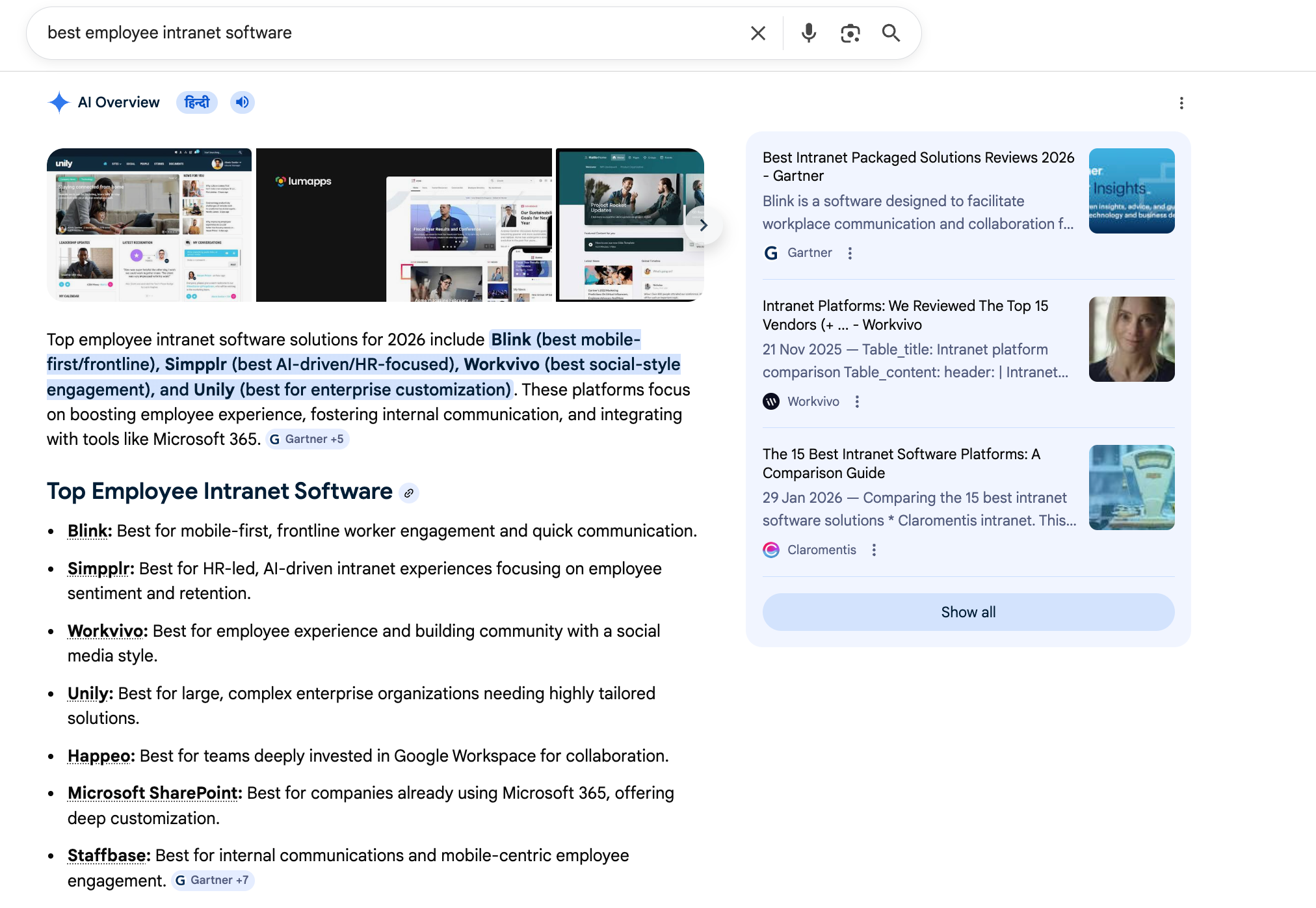
BrightLocal’s 2026 data puts it plainly: 97% of consumers read online reviews before engaging with a business. That trust-verification instinct carries directly into AI search, except now the AI is doing the vetting on the user’s behalf.
The truth is, the definition of E-E-A-T hasn’t changed. The cost of ignoring it has.
The Four Signals & How They Function Differently Now
E-E-A-T has always been a compound model. But AI search has shifted the weight distribution across the four signals. Here’s how each one functions now versus in classic organic search:
| Signal | Classic Organic | AI Search Context |
|---|---|---|
| Experience | Nice-to-have differentiation | Core filter for citation eligibility |
| Expertise | Author bios, credentials | Demonstrated depth, not just declared |
| Authoritativeness | Backlink profile, brand mentions | Topical consistency + external validation |
| Trust | SSL, reviews, policies | Accuracy, transparency, editorial accountability |
Experience
Experience is the signal that’s hardest to fake and the easiest to verify. First-hand content, real tests, real workflows, real outcomes, read differently from aggregated summaries. AI systems are increasingly capable of detecting that difference.
What experience looks like in practice:
- Original screenshots, test setups, or benchmark data
- Founder or practitioner narratives tied to specific outcomes
- Process walkthroughs that reflect actual operational knowledge
- Before/after evidence, not hypothetical, not paraphrased from other sources
Generic content built from secondary research doesn’t clear this bar anymore. The bar is: could only someone who actually did this have written it?
Expertise
Expertise is demonstrated, not declared. A byline with a job title isn’t expertise. A byline with a job title, a linked profile, a publication history, and content that reflects genuine technical depth — that’s expertise.
The distinction matters because AI systems don’t just look at who wrote something. They look at whether the content holds up. Thin explanations, vague claims, and borrowed insights all signal low expertise regardless of what the author bio says.
Key expertise signals to have in place:
- Named authors with verifiable professional backgrounds
- SME review or contribution clearly attributed
- Proprietary data, original research, or primary source citations
- Technical accuracy that reflects current practice
Authoritativeness
Authority operates at two levels simultaneously: page authority and domain-level topical authority. Today, the second one carries more weight than most teams realize.
A single well-optimized page on a site with shallow topical coverage is a weaker citation candidate than a page on a site that has built genuine depth across a subject area. AI systems are pattern-matching for consistent expertise at the domain level, not just evaluating pages in isolation.
Authority signals worth auditing:
- Are you cited or mentioned by recognized publications in your space?
- Does your content architecture reflect genuine topical depth, top, mid, and bottom of funnel coverage on your core topics?
- Are your internal links structured to reinforce subject matter relationships, not just distribute PageRank?
Trust
Google’s own quality rater documentation identifies trust as the most critical E-E-A-T component. A page can look polished, cite credible sources, and feature a qualified author, and still fail if it feels unsafe, misleading, or unaccountable.
Trust is also the most visible signal to users, which makes it the one with the most direct conversion impact beyond SEO, and the data reflects this: AI-referred visitors in 2026 convert at 14.2% compared to just 2.8% for traditional organic search, a 5x higher quality lead.
Trust signals that evaluators and AI systems check:
- Accurate, up-to-date information with clear sourcing
- Transparent editorial standards, who writes, who reviews, and how errors are corrected
- Accessible business identity: About page, contact information, legal pages
- Third-party validation: reviews, compliance badges, press mentions
- Secure, well-functioning site experience
The important thing to note: required trust levels scale with topic sensitivity. A recipe blog and a healthcare information page are not evaluated against the same standard. YMYL (Your Money or Your Life) content is held to a significantly higher bar, and AI search applies that same logic when deciding what to cite.
These four signals don’t operate independently; gaps in one weaken the others. A highly authoritative domain with trust issues loses citation eligibility. Deep expertise without experience signals looks like research, not practice.
Understanding where your gaps sit is the first step. Let’s look closely at some of them.
Where Most Teams Are Leaving E-E-A-T Gaps
The gaps are rarely mysterious. They follow a pattern.
Bylines without credibility. A name, a job title, maybe a headshot. What’s missing is any evidence that the person has actually done the thing they’re writing about. A paragraph that links to a real LinkedIn profile, names specific clients or projects, and reflects a genuine career arc reads completely differently from a template field someone filled in once and forgot. AI systems pick up on the difference, and so do readers.
Content built from other content. Most of what gets published is a synthesis of what already exists: industry reports paraphrased, competitor posts repackaged, stats pulled from secondary aggregators without checking the original source. The test is simple: could someone have written this without ever working in the field? If yes, it won’t clear the experience bar.
Accountability gaps. Privacy policy, terms of service, cookie banner, present and accounted for. But who wrote the content on this site? Who reviewed it? If there’s an error, how does it get corrected? Those questions go unanswered on most sites, and both users and AI systems notice when a site can’t answer them.
Strong Pages with Weak Architecture. One or two well-optimized pages don’t build domain authority. AI search evaluates whether a site genuinely owns a topic, top to bottom, not just on the money pages. Thin supporting content, orphaned articles, and topic gaps all register. The surrounding architecture matters as much as the hero page.
Check out the CloudEagle case-study, the 113% click growth didn’t come from new content, it came from restructuring what existed so the signals were legible.
When CloudEagle worked with Quattr to optimize 33 commercial pages, the intervention wasn’t about publishing new content. It was about restructuring what already existed, semantic internal linking, content reorganization, and trust signal alignment. The result: 113% organic click growth and 3x AI Citation Share in 12 weeks.
Knowing where the gaps are is half the equation; the other half is knowing which fixes to prioritize first, and in what order.
How to Audit and Prioritize E-E-A-T Fixes
A full E-E-A-T audit sounds overwhelming, but it doesn’t have to be. Your goal should not be to fix everything; it should be to fix the right things in the right order, starting with the pages that carry the most business weight.
Start at the Site Level
Before touching individual pages, check whether your site-level trust infrastructure is in place. These signals affect every page on your domain:
- About page with named team members and a clear company identity
- Editorial policy: who writes, who reviews, how errors get corrected
- Contact information that’s easy to find
- Legal pages: privacy policy, terms, cookie policy
- Author and reviewer profile pages that are indexable and substantive
If these are missing or thin, page-level fixes will underperform. These are strong foundational blocks.
Then Move to Page-Level Signals
For your highest-priority pages, commercial, YMYL, or top organic traffic drivers, run through this audit sequence:
- Does the author have a named, linked, verifiable profile?
- Is expertise demonstrated through depth, not just claimed through credentials?
- Are key claims sourced to primary or authoritative references?
- Is there first-hand evidence, original data, screenshots, or real outcomes?
- Is the content current? Outdated information is a trust signal in the wrong direction.
- Does the page have relevant schema implemented correctly, Article, Author, Organization?
Prioritize by Gap Severity and Page Value
Not every gap costs the same. A missing author bio on a low-traffic informational page is a low-priority fix. A missing editorial policy on a high-traffic YMYL page is a critical one.
| Gap Type | Priority | Impact Area |
|---|---|---|
| No trust/policy pages | Critical | Entire domain |
| Weak or missing author signals | High | Expertise, Trust |
| No first-hand evidence | High | Experience, AI citation |
| Shallow topical coverage | High | Authoritativeness |
| Outdated claims, no sourcing | High | Trust, accuracy |
| Poor internal link structure | Medium | Topical authority signals |
Build Topical Depth
AI search evaluates domains for topical authority and for consistent, comprehensive coverage of a subject area across interconnected content. That means auditing your content architecture, not just individual pages.
This is where most enterprise teams underinvest. They optimize hero pages while leaving supporting content thin and disconnected. The result is an authority signal that doesn’t hold at the domain level.
Simpplr ran into exactly this problem. Despite strong brand recognition in the employee intranet software space, their organic visibility didn’t reflect their market position. Working with Quattr, they optimized over 200 pages and built out structured topical content hubs — connecting content intentionally rather than letting it sit in silos. The outcome: non-brand organic traffic doubled year-over-year, they became the number one site in organic traffic for their category, and paid search reliance dropped from 55% to under 30%.
The content existed. The architecture didn’t. Fixing the structure unlocked the visibility that the pages had already earned.
Track the Right Signals Over Time
E-E-A-T isn’t a one-time audit; it degrades. Content goes stale. Authors leave. Industry standards shift. Build a maintenance cycle into your workflow:
- Quarterly content accuracy reviews on high-traffic pages
- The author and reviewer page updates when team composition changes
- Sourcing audits to replace outdated statistics and references
- Monitoring AI Citation Share alongside traditional rank tracking
Search Engine Journal notes that LLM-based platforms consistently elevate content with strong expertise and authority signals but those signals have to be maintained.
The teams winning AI search visibility aren’t doing more. They’re doing the right things systematically, across the full content lifecycle.
That kind of systematic execution is exactly what breaks down when E-E-A-T work is spread across disconnected tools and manual processes, which is where most teams are today.
Quattr: Built for the Way E-E-A-T Actually Works
Most teams are running E-E-A-T work across a stack of disconnected platforms, one tool for audits, another for content scoring, another for rank tracking, and manual spreadsheets for gap analysis. The insight exists somewhere. Acting on it systematically doesn’t.
Quattr brings the full workflow into one place, so your team can identify E-E-A-T gaps, prioritize fixes, execute optimizations, and track AI visibility impact without the context-switching tax.
Schema and Entity Optimization — Implement and validate structured data that makes your expertise and authorship signals machine-readable
E-E-A-T Content Audits — Get scoring and guidance to fix and surface trust, expertise, and experience gaps across your entire page inventory
AI Citation Share Tracking — Monitor how often and where your content is being cited across AI search environments
Topical Authority Mapping — Identify coverage gaps and structural weaknesses in your content architecture before they cost you visibility
Semantic Internal Linking — Build subject matter relationships across your content that signal topical depth to both crawlers and AI systems
Content Prioritization Engine — Focus your team’s effort on the pages with the highest visibility upside, not just the ones easiest to fix
If you want to see how this works against your actual content inventory, book a demo.
Frequently Asked Questions
No. Google has confirmed E-E-A-T is not a direct ranking signal. It’s a quality evaluation framework used by human raters and increasingly reflected in how AI systems assess source credibility. That said, pages aligned with E-E-A-T principles consistently perform better, because they’re genuinely more useful and trustworthy.
AI Overviews prioritize sources with demonstrated topical authority, verifiable expertise, and strong trust signals at both the page and domain level. There’s no public methodology, but the pattern is consistent: comprehensive coverage, accountable authorship, and accurate sourcing improve citation eligibility.
Start with trust infrastructure: About pages, editorial policies, author profiles, and legal pages. These affect your entire domain. Page-level experience and expertise gaps come next, prioritized by traffic and business value.

Quattr is an AI-native Search Visibility Platform founded in Palo Alto, California, built for mid-market and enterprise brands competing in the age of generative search. Recently recognized across G2's Spring 2026 reports with #1 rankings in AEO Results, Usability, and Relationship, Quattr helps brands win visibility across traditional search and AI-generated answer surfaces.
Quattr's AI agent, GIGA, evaluates content the way AI systems do, identifying gaps across structure, authority, internal linking, and discoverability to surface the highest-impact fixes. With capabilities like autonomous internal linking, E-E-A-T intelligence, and the new GIGA Landing Page Generator for keyword-matched, AI-search-ready pages, Quattr helps teams move from diagnosis to deployed changes without manual bottlenecks.