

Table of Contents


Case Studies
Related Content
What Is an SEO Keyword Cluster and How to Create One?
Learn what is Keyword Clustering & How to Cluster Keywords in Semantic Groups
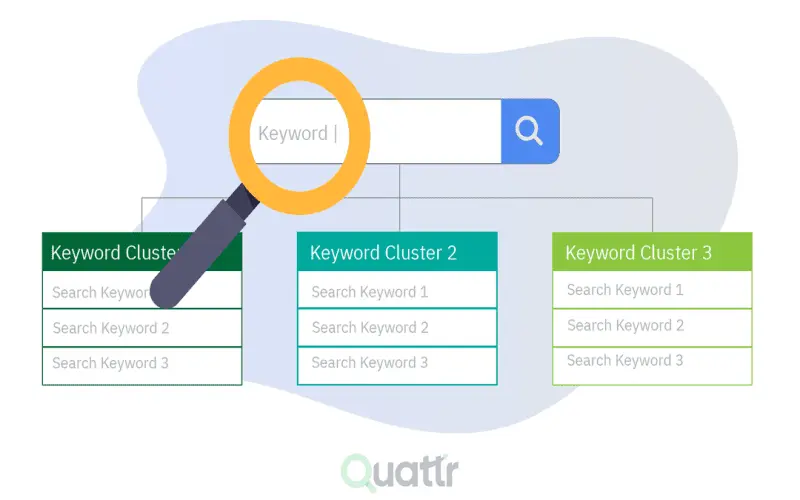
Keyword optimization is a fundamental part of SEO and often the first thing marketers think about when trying to improve search visibility. Although keyword optimization has been around since the early days of SEO, it has evolved alongside search engine algorithms. Today, it’s no longer just about targeting single keywords but building a smarter strategy around keyword clusters, groups of related terms that help you create more comprehensive, relevant content and improve your chances of ranking higher.
What is SEO Keyword Optimization?
Keyword clustering is an SEO strategy that involves grouping together search terms with the same user intent and targeting them on one page.
For example, searches like “best budget smartphones,” “affordable smartphones,” and “cheap smartphones under 20000” all reflect a similar intent, finding a cost-effective phone, so search engines typically display similar results for these queries.
What is Keyword Clustering?
Keyword clustering is an SEO strategy that involves grouping together search terms with the same user intent and targeting them on one page.
For example, searches like “best budget smartphones,” “affordable smartphones,” and “cheap smartphones under 20000” all reflect a similar intent, finding a cost-effective phone, so search engines typically display similar results for these queries.
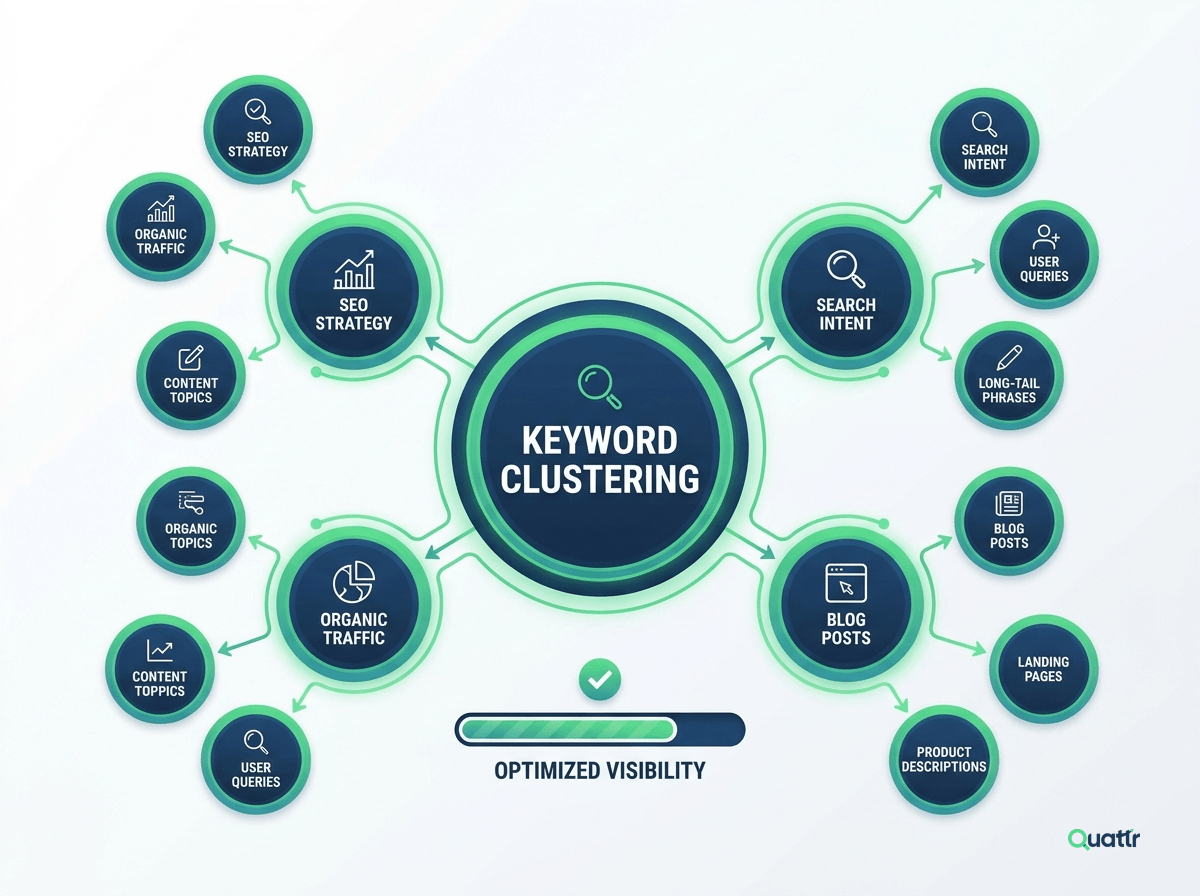
Benefits of Keyword Clustering
1. Increased Visibility: Keyword clustering simplifies the task for search engine crawlers to find and index content related to specific search terms, enhancing the likelihood of your content appearing in search engine results pages (SERPs).
2. Improved Content Structure: Organizing related topics under one main theme through keyword clusters helps users quickly find relevant information, improving their overall experience.
3. Higher Ranking Potential: Using keywords in clusters can significantly increase a webpage's relevance compared to non-clustered pages, resulting in better search engine rankings.
4. Reduced Competition: Targeting long-tail keywords and low-competition terms through keyword clustering can boost your chances of ranking higher in search engine results.
5. Easier Optimization: Keyword clustering allows for more accurate and efficient content optimization, ensuring you consistently target the most relevant keywords for your page.
Types of Keyword Clustering
There are two primary approaches to keyword clustering:
Semantic Clustering
This method groups keywords based on how closely their meanings are related. It uses Natural Language Processing (NLP), a branch of AI that helps machines understand human language. With NLP, tools can analyze the context and relationships between words, allowing marketers to cluster keywords that revolve around the same idea or topic.
SERP-Based Clustering
This approach groups keywords by analyzing search engine results pages (SERPs). If multiple keywords consistently show similar webpages in the results, it indicates they share the same intent. As a result, these keywords can be targeted together within a single piece of content, based on how search engines already connect them.
How To Optimize Your Page For Keyword Clusters?
Keyword clustering improves search relevance and user experience by grouping related terms into comprehensive topic hubs. Integrating these keyword clusters across content, metadata, and visuals creates a robust SEO strategy that captures diverse search intent and drives targeted traffic.
Keyword Clusters Optimization Steps
1. Keyword Research & Grouping
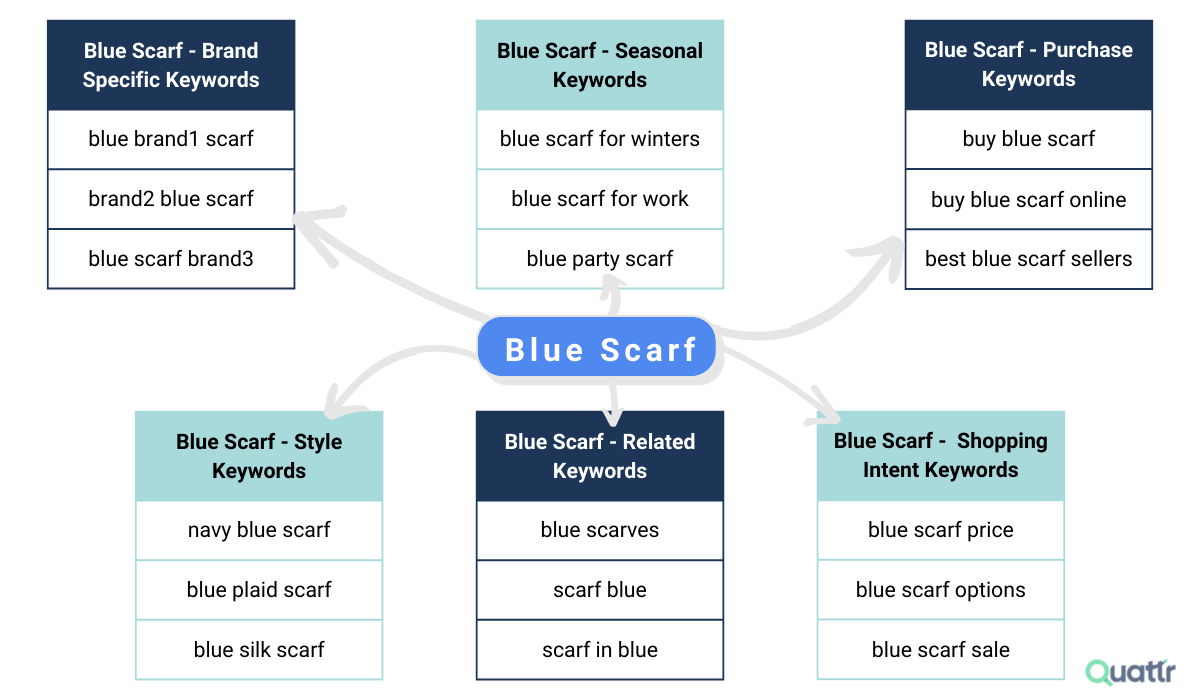
Use your favorite research tool to ideate, find, and confirm what keywords potentially match your site and offers. At this stage, grab anything and everything. Don’t worry if the words are not an exact fit for what you currently need. Your mantra at this stage should be “all the things!” which will all go to use eventually. During this phase, you can begin making initial groups based on what you might assume the intent to be.
2. SERP Review & Intent Matching
Once you have your inventory of keywords and terms, you will need to layer on more data to make things concrete and complete. This additional data is essentially labeling your keywords by their search intent.
Specifically, this is NOT the assumed intent you might make by looking at the keyword. Instead, it is actually searching the keyword in question and reviewing what is shown to users on the first, second, and third pages. There are 4 core categories of search intent: navigational, transactional, commercial, and informational. Learn how to optimize web pages for search intents here.
After the intent classification is in place, you can further refine your initial keyword clusters.
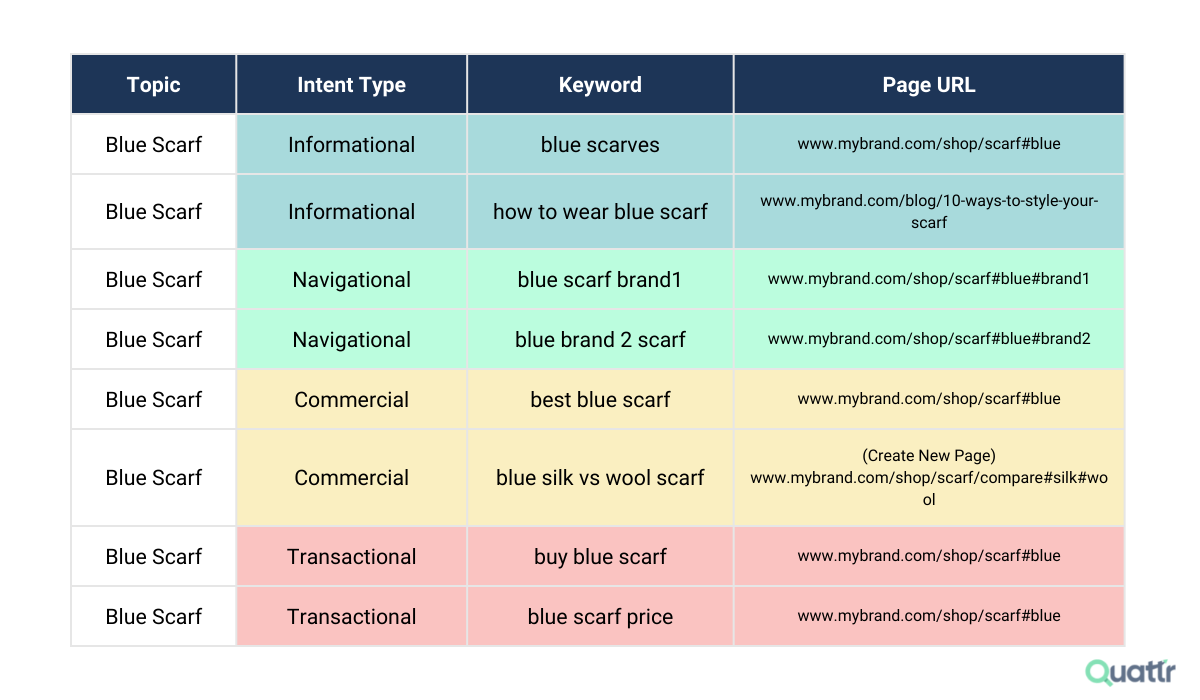
3. Page Strategization Planning
With your newly completed keyword and intent groupings, you can begin outlining what pages and clusters might fit your brand. This planning should include your existing pages and some high-level hierarchy needs, as well as figuring out how you intend to potentially use search traffic to drive your site's goals and objectives. You want to create or optimize pages based on the user’s purchase journey and create topical hubs that would benefit your brand.
4. Competing Page Research
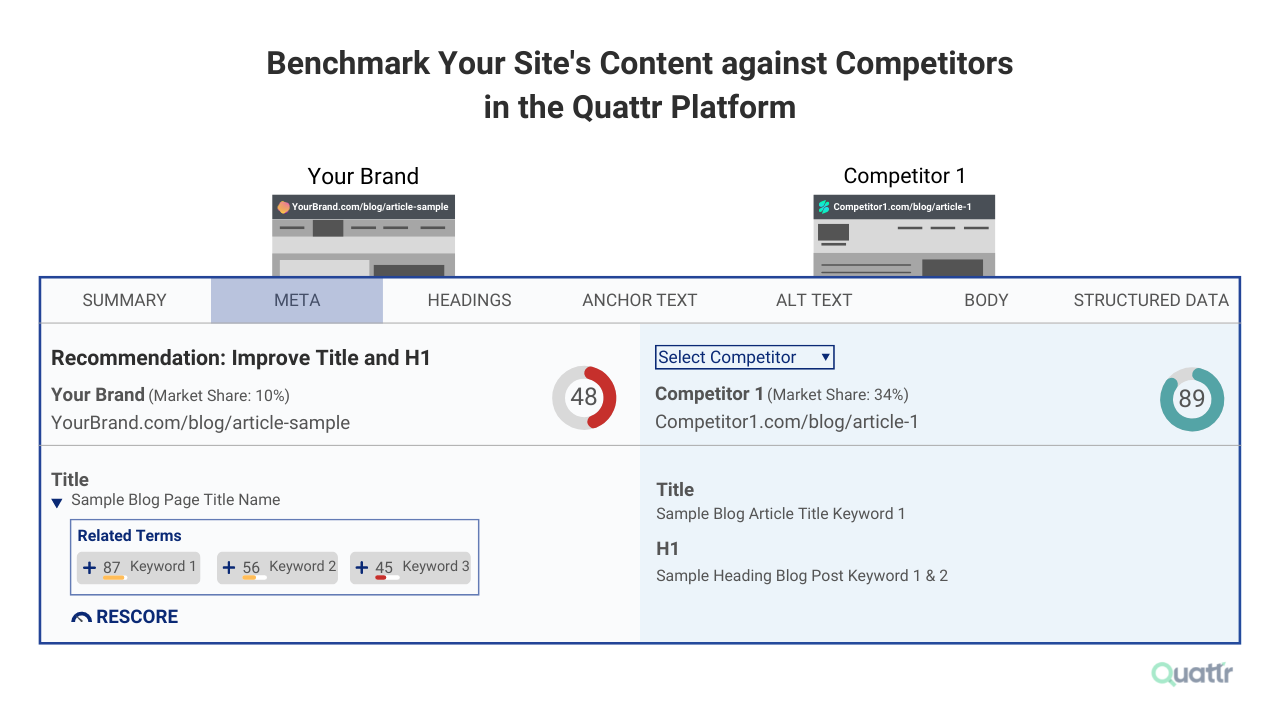
Now that you have a site strategy, page goals, and keyword clusters. You can begin doing your homework around what you need to compete and beat your competition in organic search. This research should include word count, keywords, content types, tools offered, page layout, page headings, and more.
When using the Quattr platform, the keyword recommendations view allows you to see what keyword clusters your existing page is ranking for. The Quattr platform scores your pages and allows you to make changes to the metadata, headings, body copy, image alt text, and structured data. Any copy edits are immediately reflected in score changes. You can then implement these changes on your website.
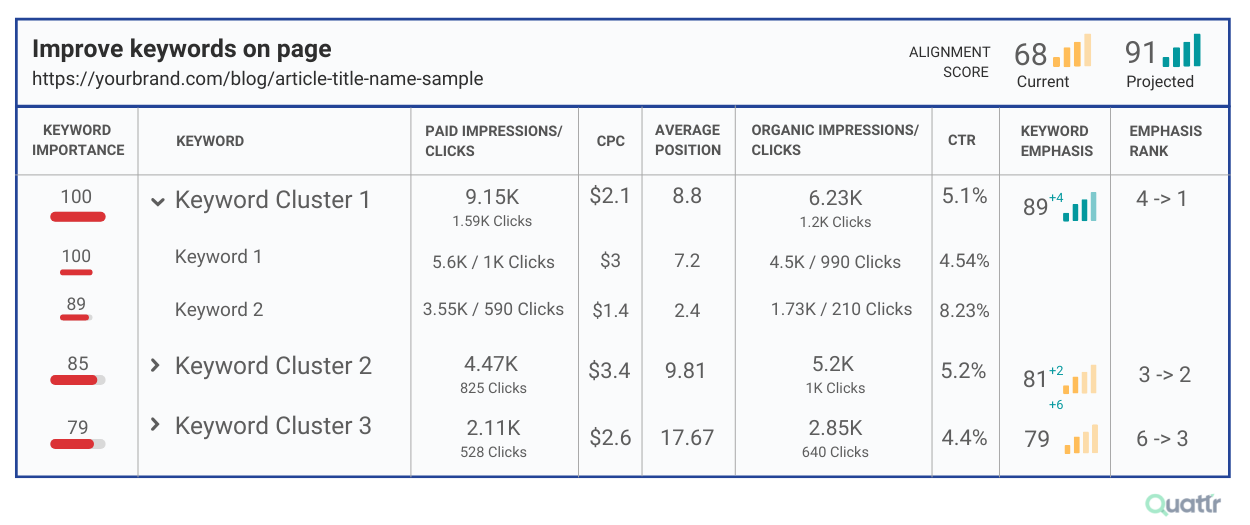
Quattr’s sandbox environment lets you test copy changes to see how that impacts the top keyword clusters for that page, compare results with competitors and make changes with the assurance that your updates will bring results.
5. Topical Needs and Headings
Once you know what the competition has regarding content and offers, you can begin outlining what your page needs. The easiest way tends to be with the topic, intended action, and headings. For example, you may outline that the top of your page needs a detailed copy section. While the middle portion of the page may require a mix of calls to action and resources. The bottom portion of the page is dedicated to questions, selling points, and more topic detail. Ultimately this is your chance to plan how you want users to use and navigate your page.
6. Content Creation
Having an outline for the page allows almost anyone to write helpful, engaging, and valuable content. Utilizing your keyword groupings, you can begin writing copy and adding these terms naturally within it. Keep in mind who you ultimately are writing for; in some cases, your content will need to be more technical or require more straightforward phrasing and terminology. A lot of this can be gleaned from your desired audience or even competitors directly - try to learn from those with the most experience and history.
7. Resource and Internal Linking
Eventually, you will need to ensure the page has logical links to references made, data citations, and where they could go next. This should become part of your content strategy and writing process, but giving your own time and thought is good too. Especially once you have a semi-completed page that can give you an idea of what a user might see and what they might want or expect to do next.
Pro Tip - Don’t overdo it with interlinking; keep things simple and logical. Always make sure there is a clear purpose or reason for creating links, whether internal or external.
8. User Validation & Testing
Once the page is complete and published, you can begin understanding how search engines and users interact with your content. This data can come from Google Analytics, Google Ads, Google Search Console, Crazy Egg, SEMRush, Quattr, etc. Overall this data can help you understand if your page is getting the right keyword rankings, page usage, and hopefully conversions. As time progresses, you will be able to gather more data and validation for what is working and what is not.
9. Additional Page Refinement
Lastly, leveraging everything you have gained to this point would allow you to make further page refinements and content optimizations. This should be naturally part of the content creation cycle in a perfect world and SEO process. You never end up with dozens or hundreds of pages that yield little to your website's end goals. This continual content optimization and refinement has some additional benefits with keeping pages fresh and robust.
Keyword Clustering Tool
A keyword clustering tool identifies, and groups related keywords, allowing businesses to better organize their content strategy and target specific audiences. By grouping related keywords, businesses can create more focused and targeted content that is more likely to rank highly in search engines and attract the right traffic.
A keyword clustering tool can also help businesses identify gaps in their content and opportunities for new content creation and inform their keyword research and SEO strategy. Benefits of using a keyword clustering tool:
1. Helps businesses create targeted campaigns: Clustering keywords allows companies to segment their campaigns by related topics and phrases, making creating ads with a cohesive message easier.
2. Improves search engine rankings: Grouping related keywords together can improve rankings, as search engines will more quickly identify the content as relevant to the search query.
3. Enhances keyword research: A keyword clustering tool can help businesses identify new related keywords to target in their campaigns.
4. Simplifies data analysis: By grouping related keywords, companies can more easily measure the performance of each cluster and make informed decisions.
5. Identifies new target markets: Clustering keywords can reveal new target markets and potential customers.
Finding a keyword clustering tool is hard when there is a sea of so many platforms. A good keyword clustering tool should have the following features. The tool should be able to automatically group related keywords into logical clusters and allow users to customize their segmentation parameters.
Clustering is about making your keyword optimization process faster and smoother for SEO.
A good keyword clustering tool should also be able to generate reports, graphs, and analytics so that you can easily monitor your campaigns’ results. The tool should also help you identify long-tail keywords you may not have considered before.
Finally, a good keyword clustering tool should provide insights into how the keywords are performing, how they’re being searched, and the corresponding competition. This will help you make more informed decisions on which keywords to focus on.
Automate Keyword Clustering with Quattr
Quattr offers a keyword clustering tool designed to help businesses optimize their SEO strategies. It utilizes natural language processing to analyze large amounts of keyword data and quickly group related keywords together.
With Quattr, businesses can easily identify high-value keywords, monitor their ranking performance, and create targeted content that resonates with their audience. The tool also allows users to visualize their keyword clusters in a user-friendly interface, making it easy to understand and act upon the insights gained.
By taking advantage of Quattr's advanced keyword clustering capabilities, businesses can improve their website's search engine rankings, attract more traffic, and ultimately increase their revenue. Whether you're an SEO agency, digital marketer, or business owner, Quattr SEO Plaform is an essential tool for optimizing your online presence and staying ahead of the competition.
Start Keyword Clustering with Quattr right now!
Request a DemoFAQs
What is Keyword Clustering?
Keyword clustering is a process of grouping similar keywords into clusters. It is used to organize and simplify large keyword sets into short, meaningful clusters that can be used for SEO campaigns. This process helps to refine keyword research and allows users to create more targeted and effective SEO strategies.
How Keyword Clustering Powers SEO?
Keyword clusters enable webmasters to optimize content for search engine rankings better. They allow them to focus content around a particular keyword phrase or topic, improving the relevance and visibility of their content. By grouping related keywords, they can better target the search engine algorithms, increasing the chances of obtaining higher SERP rankings.
How to Optimize Keywords for SEO?
When optimizing keywords for SEO, webmasters should conduct keyword research to identify the most relevant terms for their websites. They should then create keyword clusters to group related words and focus content around those topics. Finally, they should use specific keywords in meta titles, descriptions, and headings to further improve the ranking of their content.
About The Author

About Quattr
Quattr is an AI-native Search Visibility Platform founded in Palo Alto, California, built for mid-market and enterprise brands competing in the age of generative search. Recently recognized across G2’s Spring 2026 reports with #1 rankings in AEO Results, Usability, and Relationship, Quattr helps brands win visibility across traditional search and AI-generated answer surfaces.
Quattr’s AI agent, GIGA, evaluates content the way AI systems do, identifying gaps across structure, authority, internal linking, and discoverability to surface the highest-impact fixes. With capabilities like autonomous internal linking, E-E-A-T intelligence, and the new GIGA Landing Page Generator for keyword-matched, AI-search-ready pages, Quattr helps teams move from diagnosis to deployed changes without manual bottlenecks.

Read More


Ready to see how Quattr
can help your brand?
Try our growth engine for free with a test drive.
Our AI SEO platform will analyze your website and provide you with insights on the top opportunities for your site across content, experience, and discoverability metrics that are actionable and personalized to your brand.