
Page-one footprint retention
also called Page-one retentionFootprint retentionPage-one slots held
Definition
How much of the page-one presence held in an earlier window is still held now, whether a market event cost you standing space or merely rearranged it.
Scope, grain and dimensions
- Grain
- One content format, across a current window and a comparison window.
- Dimensions
- content format
- Required filters
- date range · comparison date range
- Aggregation
- A comparison between two windows of results-page observations, averaged across the rows in scope. Retention percentages do not average across formats meaningfully; each format's retention is against its own comparison base.
- Metric type
- rate · a retention percentage against the comparison window
Data sources
Where you'll see this
Named reports that normally include this metric.
SERP volatility and algorithm update report
Skills and analyses that use it
Skills carry the judgment; the analysis verbs do the reading.
Method rungs and levers
A rung tells you what a movement here can and cannot explain, read the rungs below it first.
levers L2 Demand modeling
Ask Quattr
- "Did we keep our page-one space through the update?" Simulate this →
- "Which content formats lost page-one ground?" Simulate this →
Caveats, freshness and failure modes
Retention is against a chosen comparison window, so the reading changes with the window, a quiet comparison base makes an ordinary week look like a collapse.
Slots are results-page positions, not clicks: holding the same footprint through a layout change can still cost traffic.
The dataset carries a retention percentage and a separate share-retention index among eight related figures. They are different readings and must not be quoted interchangeably.
Content format is the only dimension on it. There is no platform, country or device axis, so a cut by those is not something this dataset can answer.
- Freshness
- ~1 day behind, daily observation, available the following day.
Common failure modes
- Comparing retention figures computed against different comparison windows.
- Reading a retained footprint as retained traffic.
- Averaging per-format retention into a site figure.
- Quoting the share-retention index as though it were the retention percentage.
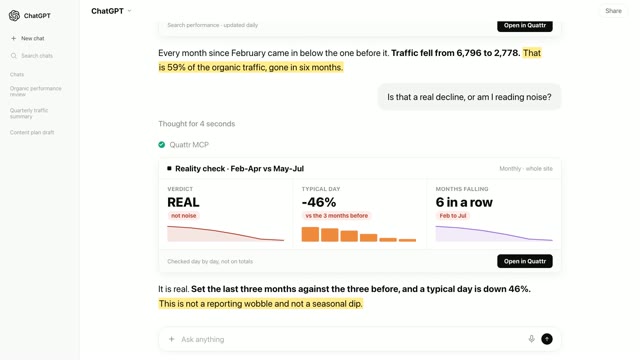
Watch this metric read in a real run
All runs →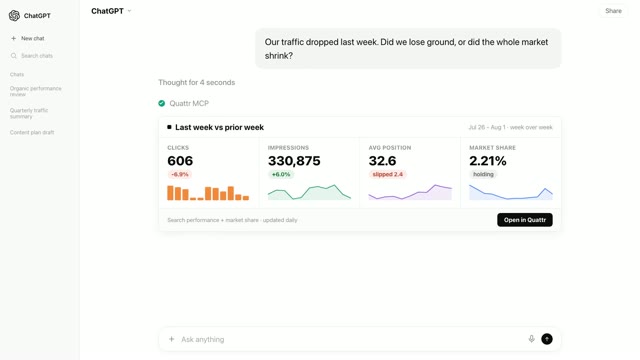
Related metrics and workflows
Verification
A definition is the smallest part of this.
The measurement matters because something acts on it. Here is the rest of the showcase, in the order most people find useful.