
Mention polarity counts
also called Positive, negative and neutral mentions
Definition
The split of a brand's results-page mentions into positive, negative and neutral counts.
Scope, grain and dimensions
- Grain
- One domain × polarity class × segment × period × medium.
- Dimensions
- competitor domain · intent · brand · country · device
- Required filters
- segment_id · selected_period · source_medium
- Aggregation
- Would be three counts that together account for the total mention count for one domain and period.
- Metric type
- raw measure · mentions in each polarity class
Data sources
Skills and analyses that use it
Skills carry the judgment; the analysis verbs do the reading.
Analysis verbs
competitive_overviewcompetitive_trends
Method rungs and levers
A rung tells you what a movement here can and cannot explain, read the rungs below it first.
levers L6 Authority & off-site
Ask Quattr
- "How much of what is said about us on these results pages is negative?" Simulate this →
- "Did negative mentions rise this period?" Simulate this →
Caveats, freshness and failure modes
Direction is class-dependent, more positive mentions is not the same kind of good as more negative mentions is bad, so a single direction cannot be stamped on the family.
The three counts are opt-in sub-metrics of a gated family; both verbs refuse the whole family before any read.
Each measure name is carried in the registry as a hypothesis, unreconciled against the product. The semantic layer does define all three as sums of the corresponding mention columns, so the open question is the reconciliation, not whether the fields exist.
The three classes are summed from a validated-visible column with a legacy fallback, and they are not guaranteed to add up to the separately defined total-mentions measure.
- Freshness
- ~1 day behind, Daily observation, available the following day.
Common failure modes
- Summing the three classes and presenting the total as the mention count without checking they reconcile.
- Reading a zero class as an absence of sentiment rather than an absence of data.
Not the same as
The confusions that cause the most wrong decisions.
Mention polarity counts Mention sentiment percentages Compare definitions →
Counts are volumes; the sentiment percentages are proportions of the same population, and one cannot be inferred from the other without the total.
Mention polarity counts Brand mentions on the results page Compare definitions →
This is the total; polarity counts split the same population by tone and are separate measures with their own reconciliation status.
Watch this metric read in a real run
All runs →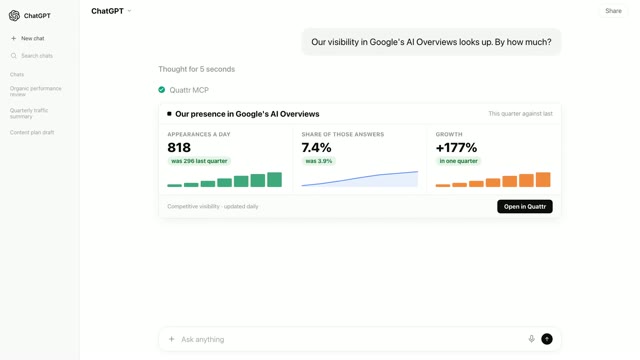
Related metrics and workflows
Verification
A definition is the smallest part of this.
The measurement matters because something acts on it. Here is the rest of the showcase, in the order most people find useful.