
Status-code hits
also called Crawl errorsError responses to crawlers
Definition
How many times each URL returned a given HTTP status to a crawler in the period.
Scope, grain and dimensions
- Grain
- One count per URL and status code.
- Dimensions
- url · status_code · bot_type
- Required filters
- date_range
- Aggregation
- Sums across rows within a URL and status.
- Metric type
- raw measure · log requests per URL and status
Data sources
Where you'll see this
Named reports that normally include this metric.
AI bot activity reportCrawl log reportTechnical SEO audit report
Skills and analyses that use it
Skills carry the judgment; the analysis verbs do the reading.
Analysis verbs
status_error_analysis
Method rungs and levers
This sits on the bottom rung: if it reads badly, every measurement above it is unreliable.
levers L1 Technical & crawl health
Ask Quattr
- "What pages are erroring for Googlebot?" Simulate this →
- "Are we serving server errors to AI bots?" Simulate this →
Caveats, freshness and failure modes
The error-class filter does not match the data it is applied to. Treat an empty result from this read as a filter defect, not as evidence that nothing errored.
This read is available on the internal tool surface only; it is not exposed to external callers today.
The status field is a labelled band, not a numeric code: statuses are collapsed into named buckets, and unusual codes inside a class fall into an other-response bucket rather than being reported individually.
The bot is a filter on this read, not a returned column, so a result cannot be split by which crawler received the status without re-running it per bot.
The list is capped, so it is the top erroring URLs by volume rather than every erroring URL.
Same origin-only caveat as all log reads: a status served from a CDN edge may never reach the log.
- Freshness
- hours to nightly, depends on how logs are shipped; the card carries the ingestion time.
Common failure modes
- Reading an empty result as a clean bill of health.
- Reading the capped list as the complete set of errors.
- Treating a high count on one URL as severity without checking which bot received it.
Not the same as
The confusions that cause the most wrong decisions.
Status-code hits Indexability flags Compare definitions →
Status-code hits are what the server actually returned to a crawler; indexability flags are what the crawl graph concluded about a page. One is observed, the other is assessed.
Watch this metric read in a real run
All runs →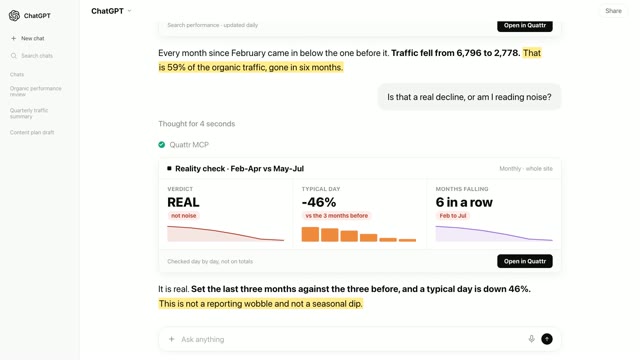
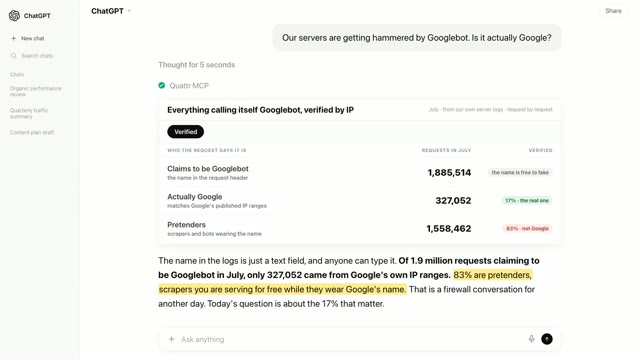
Related metrics and workflows
Verification
A definition is the smallest part of this.
The measurement matters because something acts on it. Here is the rest of the showcase, in the order most people find useful.