
Period-over-period change
also called DeltaPoP changeChange vs prior period
Definition
The difference between a metric in the selected period and the same metric in a comparison period, computed from two identical queries that differ only in their date filter.
How it's calculated
delta = selected − comparison. Each side is rounded to two decimals before the subtraction; either side missing yields null rather than zero. The comparison leg is the selected leg's query with only the period filter value swapped, so every other filter is held identical.
Scope, grain and dimensions
- Grain
- One row key × the pair of periods.
- Dimensions
- query · page · country · device · intent · category
- Required filters
- date range · comparison range
- Aggregation
- Computed per row and joined on the row key, the non-numeric columns of the result, never on row order, because the two periods return different key sets at page and query grain. Rows present in only one of the two periods get a null delta, not a delta against zero; only their counts are reported. Row-index pairing survives in exactly one place: a pure aggregate with no dimension columns, where both sides are a single row.
- Metric type
- derived metric · the same unit as the metric being compared
Data sources
Where you'll see this
Named reports that normally include this metric.
AI Overview and SERP feature reportCannibalization reportContent decay reportContent performance reportCrawl log reportKeyword ranking and movement reportMonthly executive search reportSERP volatility and algorithm update reportWeekly search report
Skills and analyses that use it
Skills carry the judgment; the analysis verbs do the reading.
Analysis verbs
compare_periodssearch_performancegsc_breakdownseo_ranking_movement_report
Method rungs and levers
A rung tells you what a movement here can and cannot explain, read the rungs below it first.
Ask Quattr
- "How did clicks change versus the previous month?" Simulate this →
- "Compare last week to the week before by page" Simulate this →
- "Which categories lost the most impressions versus last quarter?" Simulate this →
How to read it
A description of what changed, not a claim that it changed for a reason or that the change is distinguishable from noise. Comparisons hold every filter constant except the date, so a delta is only as like-for-like as the two windows are, unequal lengths, or a window that straddles a seasonal break, produce a real delta about the wrong thing.
Caveats, freshness and failure modes
The comparison window is explicit; the assistant does date arithmetic rather than relying on relative expressions, so a mis-specified window silently produces a valid delta about the wrong period.
Unmatched rows are counted and reported separately, and their delta is null rather than a number. Reading the unmatched count itself as a set of launches and collapses is the common misread, it is a coverage difference between two windows.
Position deltas invert: a negative delta is an improvement.
- Freshness
- 1 to 2 days behind, Google's own reporting lag. Any answer touching the last 48 hours says so on the card.
Common failure modes
- Comparing a 28-day window to a calendar month and reading the length difference as performance.
- Substituting zero for an unmatched row's null delta and totalling it into a period change.
Not the same as
The confusions that cause the most wrong decisions.
Period-over-period change Real, noise or can't-tell Compare definitions →
A delta states how far the number moved; a significance verdict states whether the move is distinguishable from noise at an alpha. The verdict is a p-value threshold only, no effect size is computed anywhere, so a significant change can be trivially small and a large delta can fail the test.
Watch this metric read in a real run
All runs →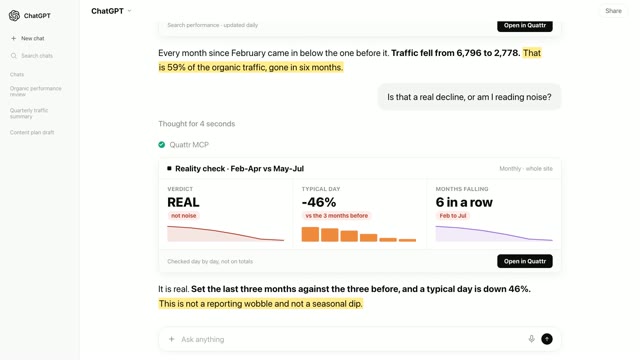

Related metrics and workflows
Verification
A definition is the smallest part of this.
The measurement matters because something acts on it. Here is the rest of the showcase, in the order most people find useful.