
Organic impressions
also called ImpressionsTotal impressions
Definition
The number of times one of your results appeared on a Google results page for a search, whether or not anyone clicked it.
How it's calculated
`nvl(sum(impressions), 0)`, a plain sum of the Search Console impression column across the selected rows.
Scope, grain and dimensions
- Grain
- One date range × the selected slice, whole site, one keyword, or one page.
- Dimensions
- query · page · country · device · intent · category · brand · rank bucket · search type
- Required filters
- date range · source medium
- Aggregation
- Sums across rows and dates. It is also the weight behind average position and behind every CTR figure in this reference, so it should never be filtered differently from the metric it weights.
- Metric type
- raw measure · impressions
Data sources
Where you'll see this
Named reports that normally include this metric.
AI Overview and SERP feature reportCannibalization reportCompetitor search reportContent decay reportContent performance reportCTR opportunity reportInternal linking reportKeyword ranking and movement reportPaid and organic overlap reportSearch opportunity reportTechnical SEO audit reportWeekly search report
Skills and analyses that use it
Skills carry the judgment; the analysis verbs do the reading.
Skills
search-pulseweekly-search-reportrank-movement-reviewstriking-distance-sprintcannibalization-check
Analysis verbs
search_performancegsc_breakdownseo_ranking_movement_reportcompare_periods
Method rungs and levers
A rung tells you what a movement here can and cannot explain, read the rungs below it first.
Ask Quattr
- "Did our impressions grow last month?" Simulate this →
- "Which keywords have impressions but almost no clicks?" Simulate this →
- "Impressions by device for non-brand demand" Simulate this →
How to read it
The Retrieved rung in one number: whether you enter the pool a ranking system draws from at all. Rising impressions with flat clicks usually means you entered more results pages at positions that do not earn, which is a position or a snippet question, not a demand question.
Caveats, freshness and failure modes
Google's September 2025 num=100 reporting change moved the impression baseline. Windows that straddle it produce artifact movement in impressions and average position, and comparisons across it need re-cutting rather than narrating.
Privacy-suppressed query rows are omitted from query-level breakdowns; the BigQuery export groups those impressions under a placeholder query instead.
Search type defaults to web, so image, video and news impressions are excluded unless asked for.
- Freshness
- 1 to 2 days behind, Google's own reporting lag. Any answer touching the last 48 hours says so on the card.
Common failure modes
- Narrating an impression spike that is a reporting-change artifact as a demand event.
- Comparing impressions across a window boundary where the reporting basis changed.
Watch this metric read in a real run
All runs →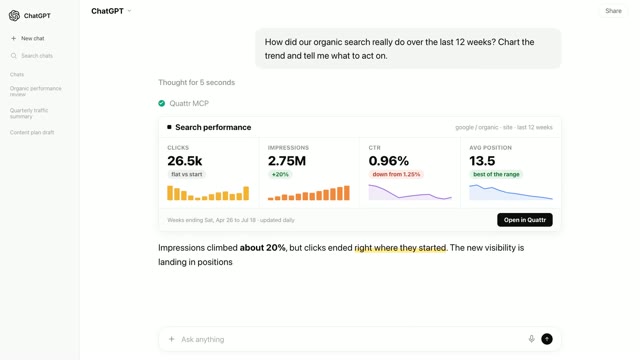 1 min 12 secCan your search data tell you what to do next?Search Console · Search pulse · Chart composer◐Recreated from an anonymized session
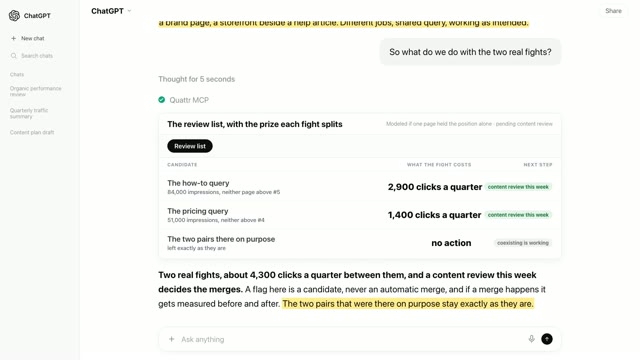 2 min 19 secOn some queries, your toughest rival is your own other page.Search Console + Rank tracking · Cannibalization check◐Recreated from an anonymized session
Related metrics and workflows
Verification
A definition is the smallest part of this.
The measurement matters because something acts on it. Here is the rest of the showcase, in the order most people find useful.